
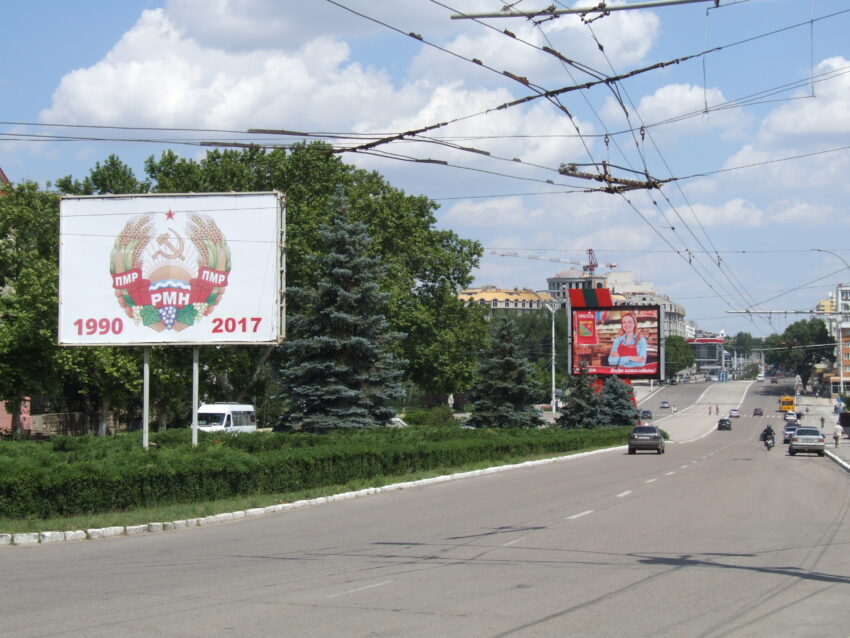
Author: Magdalena Dembińska
Affiliation: Department of Political Science, Université de Montréal, C.P. 6128, Succ. Centre-ville, Montréal (Québec) H3C 3J7, Canada
Email: magdalena.dembinska@umontreal.ca
Language: English
Issue: 1/2026 (26)
Pages: 44–63 (20 pages)
Keywords: Transnistria, de facto states, everyday life, entrepreneurship, survival strategies, oligarchic power, liminality, ethnography, political economy
Abstract
This article analyses how small entrepreneurs navigate the political economy of Transnistria, a de facto state characterised by external dependence, oligarchic concentration of power, and geopolitical uncertainty. Drawing on eleven weeks of ethnographic fieldwork conducted between 2023 and 2025, including interviews, participant observation, and detailed field notes, it employs sociological composite portraits of entrepreneurial couples to examine everyday strategies of economic survival. The analysis shows that entrepreneurs operate within a constrained field structured by the dominant Sheriff conglomerate, which functions simultaneously as regulator, partner, and competitor. Within this setting, they combine pragmatic accommodation with selective autonomy, leveraging informal networks and external linkages while maintaining the appearance of “business as usual” in conditions of systemic uncertainty. By foregrounding lived economic practice, the article argues that survival in de facto states is not merely a response to instability, but a patterned form of adaptation in which dependency, flexibility, and strategic ambiguity become normalised.
Prof. Dr. Magdalena Dembińska
Magdalena Dembińska is Full Professor of Political Science at the Université de Montréal. She specialises in nationalism, identity politics, and ethnopolitical mobilisation, with a focus on de facto states, borderlands, and post-socialist transformations in Central and Eastern Europe and Eurasia. She is the author of the monograph La fabrique des États de facto: Ni guerre ni paix (2021) and has edited several influential volumes on Euro-Russia relations, minority politics, and securitised borderlands. Her research combines theoretical innovation with empirically grounded analyses of conflict, diversity, and state formation.
 PDF
PDFIntroduction
The literature on de facto states has long focused on their emergence, survival, and eventual demise from an international relations and geopolitical perspective. While this approach remains dominant, a growing number of scholars have shifted attention to the internal dynamics of these self-proclaimed but unrecognized (or partially recognized) political entities. In the context of the Russo-Ukrainian war, however, conducting fieldwork in Eurasian de facto states has become increasingly difficult. Following the forceful reintegration of Nagorno-Karabakh into Azerbaijan in 2023 and its effective disappearance in 2024, and with access to South Ossetia and Abkhazia now severely restricted, Transnistria remains the only de facto state in the region that is still relatively accessible. Yet even there, proximity to war-torn Ukraine and the presence of Russian military forces have made research more challenging, as research funding institutions and universities are often reluctant to grant subventions or ethical clearance for fieldwork. As a result, recent scholarship has relied more heavily on discourse analysis, social media, and online interviews. Given the lack of reliable statistics and opinion polls, such approaches are undoubtedly valuable for studying conflict-affected regions. At the same time, they risk distancing analysis from lived experience. Against this backdrop, this article draws on eleven weeks of fieldwork conducted in Transnistria between 2023 and 2025, including interviews, participant observation, and informal encounters across urban and rural settings. It seeks to reconnect scholarly inquiry with the practices, strategies, and perspectives of people living in this contested space.
The article builds on a forthcoming book chapter co-authored with Stefan Morar,[1] which argues that Transnistria’s endurance cannot be explained solely by its dependence on Russia, but rather by a dynamic interplay between external constraints and domestic agency. In that analysis, drawing on Putnam’s notion of the two-level game (1988), we show how a small group of business elites linked to the Sheriff conglomerate act as strategic brokers,[2] that operate simultaneously across domestic and international arenas. Leveraging external ties to consolidate their domestic dominance, they balance dependencies and selectively align with different power centers—with Russia for security, with Moldova for legal and institutional mediation, and with the European Union actors for trade. Their brokerage contributes to the de facto state’s endurance.
While that chapter focuses on elite strategies, the present article shifts attention to smaller-scale entrepreneurs and asks how they, too, navigate and reproduce this system. I argue that the endurance of Transnistria is not only secured from above, through elite brokerage, but also sustained from below through the differentiated survival strategies of ordinary economic actors. These actors operate within a dual structure—external liminality and internal oligarchic dominance—but respond to it in varied ways depending on their position, resources, and networks. Rather than producing uniform dependence, this configuration generates distinct modes of economic action—ranging from opportunity-driven brokerage to subsistence and exit—which together contribute to the reproduction of the status quo.
In doing so, the article makes two contributions to the literature on de facto states. First, it shifts the analytical focus from elite-level brokerage to the everyday practices of small-scale economic actors, showing how regime endurance is reproduced through dispersed and often informal strategies. Second, it conceptualizes Transnistria as a socially differentiated condition of “in-betweenness”, in which this position functions both as a constraint and as a resource, unevenly accessible across actors.
To situate these strategies, the first two sections outline the external and internal structural conditions shaping economic life in Transnistria. The third section briefly introduces the method used to present data from sensitive fieldwork: composite portraits. The empirical section then presents four such portraits of entrepreneurial couples, each illustrating a distinct strategy of survival. The conclusion draws out broader patterns and reflects on what these practices reveal about the persistence of de facto states.
External layout: a condition of “in-betweenness”
The separatist region of Transnistria is predominantly Russophone but ethnically heterogeneous. It emerged in the early 1990s. During perestroika, Chișinău adopted a pro-Romanian rhetoric and, in 1989, legislated in favor of designating Moldovan/Romanian as the state language.[3] In response, Russophone industrial and military elites in Tiraspol proclaimed a separate republic. [4] A short war followed in 1991 and ended with a ceasefire in 1992. Since then, the conflict has typically been described as “frozen.” Meanwhile, the separatist region developed features of statehood but, lacking international recognition, it constitutes a so-called “de facto state.”[5]
The relative stability and security of de facto states largely depend on external backing. The literature identifies the presence of a patron state as a necessary condition for their emerge and survival.[6] De facto states are “net importer[s] of security”[7] and rely on external support to sustain their economies and provide for their populations.[8] Russia has long served as Transnistria’s patron state. At the same time, however, the region has become increasingly dependent on European export markets.[9] Notably, Moldova’s Deep and Comprehensive Free Trade Area (DCFTA), part of its Association Agreement with the European Union, has been extended to Transnistria. As a result, Transnistrian companies registered in both Tiraspol and Chișinău benefit from privileged access to the EU markets.
Geography further reinforces this dual dependency. Sandwiched between Moldova and Ukraine, and lacking both a functioning airport and access to the Black Sea, Transnistria depends on transit routes through its neighbors. Given its energy-intensive, export-oriented industrial structure, economic survival requires balancing relations with Russia (for gas and security) and Europe (for markets). Since the mid-2010s, while remaining economically dependent and politically aligned with Russia, Transnistria has become increasingly integrated into European economic circuits. This positioning renders the region particularly vulnerable to geopolitical disruption. Russia’s full-scale invasion of Ukraine in 2022 added what has been described as new a “layer of liminality,”[10] creating an existential challenge to Transnistria’s status quo.[11] Tiraspol’s central task has since been to preserve sufficient autonomy from both patron and parent states in order to navigate this shifting environment while avoiding direct involvement in the war.
The closure of Kuchurgan–Pervomaisk crossing following the invasion severed Transnistria’s main trade and transport route.[12] For the first time since 1992, the region became effectively landlocked, cut off from its eastern logistical corridors, from Russia as well as from Ukraine and other CIS markets. At the same time, Russia’s failure to capture Odessa and to establish a land corridor to Transnistria reduced the region’s strategic value for Moscow,[13] further deepening its reliance on western routes. Already partially integrated into European markets, Transnistria was forced to reorient trade flows westward through Moldova, consolidating trends initiated under the DCFTA. As a result, the region became fully dependent on Moldovan customs procedures, while banking, insurance, and logistics networks increasingly operated via Chişinău and EU-based intermediaries. Today, virtually all imports and exports pass through right-bank Moldova. The EU and Moldovan markets have become dominant, accounting for 76% of exports in 2022 (up from 67% in 2021), while trade with Russia declined by 22%.[14]
At the same time, Russia’s weakening role and Transnistria’s growing dependence on Chișinău and Kyiv place its economic model under strain. This model—based on subsidized Russian gas combined with access to European markets—appears increasingly fragile. The situation was further exacerbated when Moldova reoriented its energy imports away from Russia in 2023. Supported by the European Union, Chișinău gained unprecedented leverage over Transnistria while simultaneously obtaining EU candidate status. In this context, the prospect of a gradual “death by reintegration” has become more tangible. Yet rather than leading to collapse, these pressures appear to be stabilizing into a structured form of “in-betweenness,” in which competing dependencies are continuously recalibrated without resolution.
Domestic layout: Sheriff, the only game in town
According to Freedom House, Transnistria, with its score of just 16/100 in 2025 (political rights 5/40, civil liberties 12/60), is classified as “not free.” The politicization of the bureaucracy,[15] control of the media, and the selective application of the law characterize the regime in Tiraspol. It corresponds to what Hale terms a “patronal hybrid regime,”[16] in which political power is structured around competition between business networks. These patronal networks are organized hierarchically, in pyramidal structures through which resources are distributed and coercion is exercised. In Transnistria, such networks have progressively consolidated into a single dominant pyramid, centered on the Sheriff conglomerate.
The economic isolation that followed the 1992 conflict with Chișinău quickly became a source of profit. President and “war hero” Igor Smirnov seized control over rents derived from illicit trade, distributing them among family members and close associates.[17] As Bachelet, Duquesney, and Merle note, the regulation of goods flows in such a context reinforces the status quo by combining the advantages of a border with the opacity of non-recognition.[18] In this sense, “Transnistria became one of the most advanced and criminalized separatist movements in Eastern Europe.”[19]
Founded shortly after the de facto secession by former Soviet security agents Viktor Gushan and Ilya Kazmali, the Sheriff group rapidly expanded through close ties with the political leadership.[20] Its growth was facilitated by preferential arrangements, including exemptions from taxes and import duties in exchange for political support.[21] During the privatization wave of the early 2000s, Sheriff acquired key assets such as the Tiraspol bread factory, the Kvint distillery, and the Tirotex textile company. It subsequently established a near-monopoly across multiple sectors, including telecommunications, internet services, fuel distribution (approximately 90% of the market), and construction (around 50%).
This dominance was briefly challenged with the election of Yevgeny Shevchuk in 2011, which revealed tensions between political and economic elites. In response, Sheriff became more directly involved in politics. In the 2015 parliamentary elections, the Obnovlenie (Renewal) party, backed by Sheriff, secured a constitutional majority. Its dominance was further consolidated following the 2016 presidential election of Vadim Krasnoselsky, a former Minister of the Interior and head of security at Sheriff, with close ties to Russia’s United Russia party (Freedom House 2016). Since then, Obnovlenie has controlled both the executive and legislative branches. As one observer put it, “Transnistria came completely under Sheriff’s control.”[22]
In sum, Transnistria’s internal political economy is dominated by a tightly integrated oligarchic network. The Sheriff conglomerate stands as the central actor—better understood as a dense and partially opaque network of not always fully convergent interests—combining economic dominance with political control. It operates across a wide range of sectors, including retail chains, fuel stations, telecommunications, banking, media, construction, and manufacturing, while also exercising influence over the ruling party and key state institutions.[23] It is therefore not surprising that much of the literature links Transnistria’s survival to the strategies of these elite actors, emphasizing their ability to navigate geopolitical dependencies and sustain the system. Yet this focus leaves open an important question: how do smaller economic actors operate within a system so thoroughly structured by oligarchic dominance? It is to this question that the present article now turns. Together, these external dependencies and internal power structures define the constraints within which Transnistrian entrepreneurs must operate.
Fieldwork layout: from research to composite portraits
Before turning to the empirical analysis of entrepreneurs’ survival strategies in Transnistria, a note on methods is necessary. Conducting fieldwork in such contexts poses significant challenges that affect both research practices and outcomes. Methodologically, identifying, accessing, and gaining the trust of participants is particularly difficult in environments marked by fear and distrust.[24] Establishing a representative sample is equally problematic, raising concerns about bias and reliability. Moreover, the ethical imperative to “do no harm” is amplified in sensitive settings, where ensuring informed consent, protecting data, and guaranteeing anonymity become especially complex.[25]
While there is now a substantial body of literature on conducting research in difficult or sensitive environments, the question of how to ensure confidentiality at the stage of publication remains less thoroughly addressed. Ethical obligations extend beyond data collection: researchers must continuously assess the potential risks associated with dissemination, including what to publish and when. As Knott emphasizes, the sensitivity of data is not fixed but may evolve over time, meaning that material considered safe at one point may later become harmful.[26] In some cases, this requires withholding data from publication altogether or delaying its release for extended periods.[27] Once published, researchers lose control over how their material may be used.[28]
Standard approaches to confidentiality rely on anonymization strategies that seek to sever the link between participants’ identities and their statements.[29] However, in small or tightly knit contexts, individuals may remain identifiable despite such measures.[30] One way to address this limitation is through “protective abstraction,” which involves presenting findings at a more aggregate level, emphasizing patterns rather than individual trajectories, and thus reducing identifiable details.[31] In some cases, researchers go further by masking the research site itself.[32] Yet such abstraction raises tensions with expectations of transparency, particularly where open access to qualitative data is encouraged. As Knott argues, in such contexts, reflexive openness offers a more appropriate form of transparency than the sharing of raw data.[33]
Given the potential risks associated with disseminating sensitive material from fieldwork, I adopt a strategy of protective abstraction and reflexivity. This raises a key methodological challenge: how to remain empirically grounded while abstracting from identifiable individual trajectories. To address this, I employ the method of “composite portraits,” which combines elements of sociological individual portraits[34] with composite character narratives.[35] These portraits are constructed as aggregations of multiple real-world individuals, forming coherent figures that plausibly reflect lived experience without corresponding to any single person.[36] In this sense, they are “fictional” insofar as they do not map directly onto specific individuals. Composite portraits thus make it possible to capture patterned social realities through richly textured, lifelike narratives while preserving the anonymity of research participants.
The empirical material for this study draws on multiple periods of fieldwork in Transnistria. Initial visits in 2011, 2018, and 2019 were followed by extended stays in 2023 (six weeks), 2024 (three weeks), and 2025 (two weeks). During these periods, I conducted approximately 50 semi-structured interviews and informal conversations, of which 21 were recorded and transcribed. I also carried out participant observation in both urban and rural settings and compiled four field notebooks documenting observations and non-recorded interactions. Some participants were interviewed repeatedly across different field visits.
The construction of composite portraits proceeded inductively by clustering participants into analytically meaningful profiles,[37] from which a set of core characters—here, entrepreneurial couples—was developed. These portraits combine elements from multiple individuals while preserving the internal coherence of lived experience. To ensure empirical validity and avoid interpretive bias, I relied on triangulation across interviews, observations, and literature. In addition, these composite portraits were shared with three informants for feedback. This process confirmed that the representations were recognizable without revealing identifiable individuals.
Entrepreneurs playing the “in-between” game and the Sheriff game
In what follows, I present four composite portraits of entrepreneurial couples. This article focuses on their survival strategies, leaving aside other aspects and anecdotes of their lives—which are equally fascinating and will be explored elsewhere in a more ethnographic style as the project develops. The portraits are organized around distinct entrepreneurial strategies, systematized by each couple’s position (urban/rural, sector, scale), practices, relations to power, and outlook on the future. These strategies are not mutually exclusive in practice but represent dominant logics of action shaped by Transnistria’s in-between position and its oligarchic internal order, ranging from opportunity-driven brokerage to subsistence, survival, and exit. While presented as distinct analytical configurations, they should not be read as fixed or mutually exclusive narratives: the practices they capture often overlap, shift over time, and coexist within the same trajectories. The analytical separation adopted here serves to highlight dominant logics of action; it does not reduce empirical complexity but renders patterned variation analytically visible.
Dimitri and Olga: Adaptive brokerage
Dimitri and Olga embody a form of entrepreneurship that thrives on Transnistria’s liminal position between geopolitical and economic systems. Based in Tiraspol but increasingly mobile between urban and semi-rural spaces, they divide their time between a city apartment and a recently acquired summer house in Stroiești, a “chic place” in the Rybnitsa region, an easy two-hour drive in their Mercedes, stopping for a cappuccino in a new (2023) on-the-way café, just before the route splits to Dubossary. The project—renovating the house, restoring the fruit garden, kayaking on the nearby Dniester—is both leisure and investment. “We already brought the kayaks from Europe,” Olga notes, “just for that.”
Their core strategy consists in adaptive brokerage: identifying and exploiting the gaps created by overlapping and often contradictory regulatory regimes. Dimitri works as a consultant and intermediary between European and Transnistrian firms. Some European goods on local shelves, he explains, “passed through my hands.” Since 2022, his activity has intensified rather than declined. “There is more work now,” he says. “Obstacles don’t stop business—they just make it more expensive.” When SWIFT transfers became difficult, he shifted to intermediaries operating through third countries. “Six and a half percent,” he says, referring to the commission. “You just include it in the price.” Payments are rerouted via Kazakhstan, Bulgaria, sometimes India. Sanctions, in this sense, are not barriers but variables to be managed. “You adapt and make money on the new rules… The strong survives.”
Olga’s attempt to run a call center for Russian clients reveals another dimension of this environment. While she emphasizes that “it is very easy and cheap to start a business here,” she is critical of the local workforce: “You can give a bag of money, but it is more difficult to teach a person to earn money.” She describes a culture of nevazmojnost—a form of impotence—which complicates operations locally. Entrepreneurship, breaking with risk aversion, this is what a friend of Olga’s is teaching at the Tiraspol Business School.
Their everyday life is structured around a series of urban nodes where business, leisure, and networking overlap. A typical day moves between online work and a sequence of encounters: gym sessions (“we now go to the new one”), spa (bania de luxe and water massages), lunches at Hotel Rossiya—“you always meet someone there”—and dinners in newly opened restaurants, including a Georgian venue by the river. Evenings often end with a walk through Catherine II Park or along the illuminated central boulevard, October 25. These spaces are not incidental; they are where contacts are made and maintained. As Dimitri puts it succinctly: “Connections. This is how business works.” Access to resources often depends on such connections.
Their relationship to the political and economic order is pragmatic and largely depoliticized. “There is one government or another—it doesn’t matter,” Dimitri says, “as long as you can live and earn.” The dominance of the Sheriff conglomerate is acknowledged but not experienced as a direct constraint. Rather, it forms part of the environment within which opportunities are identified.
Mobility and connectivity are central to their strategy. They travel on Moldovan passports, like most of their peers, and spend holidays in Greece, Italy, or Turkey. Neutral license plates allow them to drive across borders, even if “everyone knows anyway” where they come from. Yet this mobility is not without friction. In Chișinău, Olga recounts, interactions can turn hostile once their origin is revealed: “Everything is fine until they hear ‘Tiraspol.’ Then it changes.” Despite such tensions, their outlook remains oriented toward status quo. Political futures—reintegration, independence, or alignment with Russia—are evaluated primarily in economic terms. “If it improves life, why not?” Dimitri says. In the meantime, they benefit from this in-between condition, converting uncertainty into opportunity.
Oleg and Yana: low-profile opportunism
Oleg and Yana operate in the same urban environment but pursue a markedly different strategy. Their activities—car trading, real estate, and short-term rentals—span both banks of the Dniester, with apartments in Tiraspol and Chișinău. Yet unlike more expansion-oriented entrepreneurs, they deliberately limit their visibility and scale. Their strategy can be described as low-profile opportunism: exploiting available opportunities while carefully avoiding exposure. “You can do any business now,” Oleg remarks, “whatever brings money [including dried hog casings from an EU country to produce sausages in Transnistria]. But you have to be careful.” The risk is not failure but success. “If your business grows too much, they will swallow you,” he explains, referring to the Sheriff conglomerate. “They will copy it, or take it.” Examples circulate as cautionary tales. A private lavender field enterprise near Dubossary, once successful, is now reportedly under Sheriff control. Another story concerns a businesswoman importing luxury clothing who was arrested for alleged customs violations. “Maybe it’s political,” Oleg suggests, hinting at conflicts among elite networks. The lesson he draws is clear: “Stay under the radar.”
In practice, this means diversification without expansion. Oleg trades cars across borders, while Yana supplements her income through Airbnb rentals, capitalizing on a small but steady flow of foreign clients. “Now we have people from Switzerland, Germany, Poland,” she says. Some come to invest, attracted by low taxes and flexible regulations. Others remain longer than expected, caught between visa regimes and administrative constraints. Their business practices reflect a constant balancing act. They exploit new openings while maintaining flexibility. At the same time, geopolitical uncertainty imposes limits. A planned crypto-mining project by a foreign investor, for instance, stalled due to energy instability after 2022.
Connections are made in the same spaces (gym, spa, specific cafés/restaurants) and remain essential but are handled cautiously. Oleg mentions contacts among deputies and individuals linked to influential circles, including figures close to the political leadership and business elite. These ties provide access and protection, but also reinforce the need for discretion. “You need contacts,” he says, “but you don’t show too much.” Even leisure reflects this embeddedness in networks of power. Through connections, they have access to activities such as shooting at a Russian military base—an experience that is both recreational and indicative of proximity to privileged circles. Their outlook is pragmatic. Unlike Dimitri and Olga, they do not seek to capitalize on instability. Instead, they aim to preserve a stable position within a volatile system. Growth is secondary to security. In this sense, they exemplify a form of entrepreneurship where “low profile” becomes a key asset.
Mikhail and Amelia: subsistence embeddedness
In a rural village, far from the urban setting, Mikhail and Amelia’s everyday life revolves around work that leaves little room for leisure. “There is no time,” Amelia says. Between their small convenience store, livestock, vegetable garden, and orchard, the day is structured by continuous activity.
Their trajectory is marked by continuity with the hardships of the 1990s. “It was much worse then,” Mikhail recalls. “No salaries, no electricity, no gas.” Survival meant cultivating potatoes and selling them at market, while Amelia periodically migrated to Russia for work in restaurants. These experiences continue to inform their present approach. Their strategy is one of subsistence embeddedness, where economic activity is inseparable from social relations. Their shop, opened some fifteen years ago when another closed, serves a community of largely pension-dependent residents. “People don’t have money,” Mikhail explains. “You feel sorry, so you give on credit.” Customers repay when pensions arrive, only to fall back into debt. This revolving credit system sustains both the convenience store and the village.
The business operates under significant constraints. Mikhail describes frequent inspections by multiple authorities—tax, sanitary, fire safety—each imposing requirements and potential fines. “They need as many fines as possible,” he says with frustration. Regulatory changes, such as separate electricity meters (house and adjacent store), increase costs. At the same time, supply arrangements offer limited relief: a local Sheriff wholesale manager allows him to take goods on short-term credit, a crucial flexibility based on face-to-face contact.
Their livelihood depends on diversification: alongside the shop, they raise animals, grow vegetables, and rely on family migration, with their son working periodically in Lithuania—“three months there, three months here”—while their daughter remains locally embedded. Migration is both a necessity and a burden, as Amelia’s remark—“What life is that?”—suggests. Before 2022, annual trips to Odessa provided a rare break, but these are no longer possible, a loss felt both materially and emotionally, as everyday life becomes increasingly shaped by routine and constrained prospects. Their outlook is marked by resignation, but also by a strong emphasis on stability—“the main thing is peace,” Mikhail insists—while political preferences remain secondary to this concern. Mikhail and Amelia thus illustrate a form of entrepreneurship in which survival depends on endurance, moral economy, and local embeddedness, rather than on growth or innovation.
Alexey and Alyona: exit-oriented diversification
Alexey and Alyona’s story traces a gradual disengagement from local economic life. Their entry into entrepreneurship dates back to the early post-Soviet period, when collective farm assets were redistributed. “It was chaos,” Alexey recalls. “We didn’t even know the size of the land. Everything was divided by hand.” Over time, structural constraints have undermined the viability of their activities. Their experience in dairy production is particularly telling. “The more milk you had, the less they [Sheriff-owned company] paid,” Alexey explains. Quality assessments were manipulated, with fat content downgraded to reduce payments. “I went to Kamenka in tears,” he recalls, after independently verifying higher quality than officially recorded. Faced with these conditions, they reduced their herd from fourteen cows to eight and diversified. Rather than investing in expansion, they spread risk across multiple small activities: cultivating sunflowers, selling produce at local markets, and engaging in informal exchanges. Alyona contributes through a succession of jobs—sewing, seasonal agricultural work (“in the apricots huge farm nearby owned by no other than Krasnoselsky and his family”), and now social care—often compensated in goods rather than cash. “Wine, oil, noodles,” she lists.
Alexey and Alyona’s position within the economic system is one of subordination. Market access is mediated by dominant actors, particularly Sheriff-linked companies, which control processing and distribution. Attempts to scale up are either blocked or rendered unprofitable. News of new agricultural enterprise counting 300 cows is interpreted through this lens: “If they opened it, it means it’s already under their [Sheriff] control,” Alexey remarks.
Their strategy is best understood as, being squeezed out, exit-oriented diversification. Their children have migrated to Europe. While, over the years, they were able to help out during the crop season, since 2022 they don’t come and no longer participate in farm work. Efforts to obtain Romanian passports reflect a broader aspiration to secure mobility and stability beyond Transnistria. This orientation coexists with local discourses shaped by Russian media and expectations of external intervention. “People wait for Russia to bring peace,” Alyona notes, “but they still try to get Romanian passports,” she adds with a smile. Their outlook is unequivocally oriented toward exit. The farm is no longer seen as a viable future but as a residual livelihood. “The children will not come back,” they say. What remains is a strategy of managing decline while preparing for departure. Economic activity becomes a temporary arrangement preceding exit, rather than a foundation for long-term reproduction.
Conclusion: business as usual, or how to survive in the “in-between” condition
The four composite portraits reveal patterned variations in how Transnistrian entrepreneurs navigate what can be described as a condition of “in-betweenness”—a configuration in which geopolitical uncertainty and oligarchic dominance do not produce collapse, but rather structure differentiated strategies of survival. Read together, these portraits suggest that entrepreneurial practices are not simply individual responses to hardship, but socially embedded adaptations to a dual constraint: an external in-between position and an internal concentration of power. More specifically, they point to a process of differentiated adaptation, whereby actors convert uncertainty into economic strategy in uneven ways depending on their position within social and economic structures.
A first axis of differentiation runs between urban and rural actors, whose positions within economic networks shape both their opportunities and their outlooks. Urban entrepreneurs such as Dimitri and Olga, and Oleg and Yana, are characterized by high degrees of mobility and cross-border embeddedness. Their activities depend on the ability to circulate—goods, money, and themselves—across regulatory and political boundaries, maintaining ties to multiple jurisdictions (Transnistria, Moldova, the European Union, and Russia), often through multiple passports, bank accounts, and business partners.
In this context, ambiguity becomes a resource. For Dimitri and Olga, a strategy of adaptive brokerage turns geopolitical disruption into economic opportunity, enabling them to profit from sanctions, rerouted trade, and regulatory fragmentation. Oleg and Yana, while similarly embedded across borders, adopt a more cautious stance, with low-profile opportunism reflecting an acute awareness of the risks associated with visibility in a system dominated by a single conglomerate. For both couples, however, the current status quo remains broadly beneficial, as it allows them to operate within a relatively predictable—if opaque—set of rules. Their preferences regarding the region’s political future remain instrumental: independence, continued ambiguity, or even reintegration are acceptable insofar as they preserve economic opportunity. By contrast, rural actors such as Mikhail and Amelia, and Alexey and Alyona, are defined by domestic constraints, subordination, and limited mobility. Their economic activities are locally anchored, tied to land, community, and low-income populations. Unlike their urban counterparts, they cannot easily reorient toward external markets or exploit regulatory arbitrage. Instead, their strategies revolve around endurance, diversification, and, in some cases, withdrawal. Mikhail and Amelia’s subsistence-oriented practices illustrate a form of entrepreneurship embedded in a moral economy of survival, where credit, reciprocity, and social obligation sustain both business and community. Their dependence on local demand, combined with regulatory pressures and rising costs, leaves little room for profit. Alexey and Alyona, by contrast, represent a case of disengagement: squeezed by market structures controlled by Sheriff and facing declining returns, they adopt a strategy of exit-oriented diversification. Their activities do not aim at growth or even stability, but at managing decline while facilitating the out-migration of the next generation.
A second axis of differentiation concerns relations to power, particularly the Sheriff conglomerate that structures Transnistria’s political economy. Here again, a gradient emerges. Urban entrepreneurs interact with this dominant actor by navigating around it through connections, discretion, and sectoral positioning. Their strategies depend on recognizing implicit boundaries—what not to do, where not to expand—rather than confronting power directly. Rural actors, in contrast, experience this dominance asymmetrically, whether through pricing mechanisms, market access, or regulatory enforcement. For them, Sheriff is less an environment to navigate than a structure that limits possibilities.
Taken together, these patterns point to a stratified system in which “in-betweenness” produces uneven effects. Rather than uniformly constraining economic life, it generates niches of opportunity for some while reinforcing precarity for others. Urban, networked actors are able to convert ambiguity into advantage, while rural, locally embedded actors bear the costs of isolation, dependency, and declining prospects. In this sense, “in-betweenness” functions as a differentiated resource, unevenly distributed across social actors.
Finally, the portraits highlight divergent future orientations. Among urban entrepreneurs, the future is open and contingent, approached with pragmatism and a focus on maintaining flexibility. Among rural actors, the future is either endured or externalized, with migration emerging as the primary horizon for younger generations. Across all cases, preferences are shaped less by ideological attachment than by material considerations and lived experience, reflecting a pragmatism grounded in everyday survival.
In sum, the endurance of Transnistria cannot be understood solely through geopolitical alignments or elite strategies. It is also reproduced through the differentiated practices of ordinary economic actors, who, in navigating uncertainty, sustain and reshape the system in uneven ways.
[1] Dembińska, Magdalena and Stefan Morar (forthcoming). Still Kicking: The Paradox of Unrecognized but Integrated, Dependent but Autonomous Transnistria. In Aleksi Ylönen et al. (eds) States in Limbo. Routledge.
[2] Dembińska, Magdalena, and Frédéric Mérand. 2019. “The Role of International Brokers in Frozen Conflicts: The Case of Transnistria.” Asia Europe Journal 17 (1): 15–30; Morar, Ștefan, and Magdalena Dembińska. 2021. “Between the West and Russia: Moldova’s International Brokers in a Two-Level Game.” Eurasian Geography and Economics 62: 293–318.
[3] Kaufman, Stuart J., and Stephen Bowers (1998). TRANSNATIONAL DIMENSIONS OF THE TRANSNISTRIAN CONFLICT, Nationalities Papers, Vol. 26, No.1, 129-146.
[4] King, Charles (2001). The Benefits of Ethnic War: Understanding Eurasia’s Unrecognised States. World Politics, 53(4), 532–533
[5] Pegg, Scott (1998). De Facto States in the International System. Institute of International Relations, The University of British Columbia, Working Paper no. 21.
[6] Kolstø, Pål. 2006. “The Sustainability of Unrecognised Quasi-States.” Journal of Peace Research 43: 723–740; Caspersen, Nina. 2009. “Playing the Recognition Game: External Actors and De Facto States.” International Spectator 44 (4): 47–60.
[7] Blakkisrud, Helge et Pål Kolstø (2011). From Secessionist Conflict Toward a Functioning State: Processes of State- and Nation-Building in Transnistria. Post-Soviet Affairs, 27(2), 185.
[8] Lynch, Dov. 2004. Engaging Eurasia’s Separatist States. Washington, DC: United States Institute of Peace Press.
[9] Dembińska, Magdalena. 2021. La fabrique des États de facto: Ni guerre ni paix. Montreal: Presses de l’Université de Montréal.
[10] German, T. (2024) Russia’s War on Ukraine, the EU, and Its Eastern Neighborhood: Layers of Liminality. Problems of Post-Communism 71(3): 259–270.
[11] Yoko, H. 2024. “The Transnistria Problem and the Crisis in Ukraine: Analysis from the Perspective of the Security Dilemma Argument.” Asia-Pacific Review 31: 64–101.
[12] Całus, Kamil (2023). “Transnistria in the New International Reality.” OSW Commentary, December 29, 2023. Warsaw: Centre for Eastern Studies.
[13] Parmentier, F. 2025. “Transnistria’s Art of Survival: Navigating the 2025 Gas Crisis.” EurAsia Prospective, June 5, 2025. Available at: https://eurasiaprospective.net/2025/06/05/transnistrias-art-of-survival-navigating-the-2025-gas-crisis-parmentier-georgetown-journal-of-international-affairs/
[14] Całus, Kamil (2023). “Transnistria in the New International Reality.”
[15] Morar, Ștefan. 2024. Nationalizing Policy in Practice: Transnistrian Street-Level Bureaucrats Performing Nationhood. PhD diss., Université de Montréal.
[16] Hale, Henry E. (2015). Patronal Politics: Eurasian Regime Dynamics in Comparative Perspective. Cambridge: Cambridge University Press, 454.
[17] Balmaceda, Margarita M. 2013. “Privatization and Elite Defection in De Facto States: The Case of Transnistria, 1991–2012.” Communist and Post-Communist Studies 46 (4): 445–454.
[18] Bachelet, Ariane, Laura-Jane Duquesney, and Thomas Merle. 2017. “Conflits de souveraineté et frontières contestées: Les États de facto de l’espace post-soviétique.” Journal of Power Institutions in Post-Soviet Societies 18, 11.
[19] Mandić, Danilo. 2021. Gangsters and Other Statesmen: Mafias, Separatists, and Torn States in a Globalized World. Princeton, NJ: Princeton University Press, 156.
[20] Balmaceda, Margarita M. 2013. “Privatization and Elite Defection in De Facto States”; Bobick, Michael. 2012. “There’s a New ‘Sheriff’ in Town: Corruption and Captive Markets in Transnistria.” Havighurst Center Working Paper. Oxford, OH: Miami University.
[21] Isachenko, Daria, and Klaus Schlichte. 2007. “The Crooked Ways of State-Building: How Uganda and Transnistria Muddle Through the International System.” Micropolitics Working Papers. Berlin: Humboldt University, 22.
[22] Devyatkov, Andrey. 2017. “The Transnistrian Conflict: A Destabilizing Status Quo.” Foreign Policy Research Institute, July 14, 2017. https://www.fpri.org/article/2017/07/transnistrian-conflict-destabilizing-status-quo.
[23] Devyatkov, Andrey, and Marcin Kosienkowski. 2013. “Testing Pluralism: Transnistria in the Light of 2011 Presidential Elections.” In Janusz Solak and Marcin Kosienkowski, eds., Spotkania polsko-mołdawskie, 303–328. Lublin: Episteme.
[24] Cohen, Nassim and Tamar Arieli (2011). Field research in conflict environments: Methodological challenges and snowball Sampling. Journal of Peace Research 48(4) 423–435.
[25] Brannen, Julia (1988). The Study of Sensitive Subjects. Research Note, Routledge 1988 0038-0261 88/3603-552; Boumaza, Magali and Aurélie Campana (2007). Enquêter en milieu « difficile ». Revue française de science politique, vol. 57, n° 1, février 2007, p. 5-25; Wood, Elisabeth Jean. 2006. “The Ethical Challenges of Field Research in Conflict Zones.” Qualitative Sociology 29(3): 373–86; Brewer, John D. (2016). The ethics of ethical debates in peace and conflict research: Notes towards the development of a research covenant. Methodological Innovations Volume 9: 1–11.
[26] Knott, Eleanor (2019). Beyond the Field: Ethics after Fieldwork in Politically Dynamic Contexts. Perspectives on Politics Vol. 17/No. 1, 140-153.
[27] Wood, Elisabeth Jean. 2006. “The Ethical Challenges of Field Research in Conflict Zones”; Brewer, John D. (2016). The ethics of ethical debates in peace and conflict research.”
[28] Knott, Eleanor (2019). Beyond the Field.”
[29] Lee, Yeon-Ok and Raymond M. Lee (2012). Methodological Researchon ‘‘Sensitive’’ Topics: A Decade Review. Bulletin de Méthodologie Sociologique 114 35–49
[30] Knott, Eleanor (2019). Beyond the Field.”
[31] Knott, Eleanor (2019). Beyond the Field,” 148.
[32] Goffman, Alice. 2014. On the Run: Fugitive Life in an American City. London: University of Chicago Press.
[33] Knott, Eleanor (2019). Beyond the Field.”
[34] Lahire, B. (2005). Portraits Sociologiques. Dispositions et variations individuelles. Armand Colin.
[35] Arjomand, Noah Amir (2024). Empirical Fiction: Composite Character Narratives in Sociological Research. The American Sociologist (2024) 55:436–472.
[36] Arjomand, Noah Amir (2024). Empirical Fiction, 437–438.
[37] Arjomand, Noah Amir (2024). Empirical Fiction, 449.
References
ARJOMAND, Noah Amir. Empirical Fiction: Composite Character Narratives in Sociological Research. The American Sociologist, 2024, vol. 55, pp. 436–472. https://doi.org/10.1007/s12108-022-09546-z
BACHELET, Ariane, Laura-Jane DUQUESNEY and Thomas MERLE. Conflits de souveraineté et frontières contestées: Les États de facto de l’espace post-soviétique. Journal of Power Institutions in Post-Soviet Societies, 2017, no. 18, pp. 1–20. https://doi.org/10.4000/pipss.4303
BALMACEDA, Margarita M. Privatization and Elite Defection in De Facto States: The Case of Transnistria, 1991–2012. Communist and Post-Communist Studies, 2013, vol. 46, no. 4, pp. 445–454. https://doi.org/10.1016/j.postcomstud.2013.08.001
BERG, E. and I. YÜKSEL. Holding Back or Pushing Forward? Patron-Client Relations and Elite Navigations in Northern Cyprus. Ethnopolitics, 2023, vol. 22, no. 5, pp. 550–567. https://doi.org/10.1080/17449057.2022.2094067
BLAKKISRUD, Helge and Pål KOLSTØ. From Secessionist Conflict Toward a Functioning State: Processes of State- and Nation-Building in Transnistria. Post-Soviet Affairs, 2011, vol. 27, no. 2, pp. 178–210. https://doi.org/10.2747/1060-586X.27.2.178
BOBICK, Michael. There’s a New “Sheriff” in Town: Corruption and Captive Markets in Transnistria. Havighurst Center Working Paper. Oxford, OH: Miami University, 2012.
BOUMAZA, Magali and Aurélie CAMPANA. Enquêter en milieu « difficile ». Revue française de science politique, 2007, vol. 57, no. 1, pp. 5–25. https://doi.org/10.3917/rfsp.571.0005
BRANNEN, Julia. The Study of Sensitive Subjects. Research Note. London: Routledge, 1988. https://doi.org/10.1111/j.1467-954X.1988.tb02929.x
BREWER, John D. The Ethics of Ethical Debates in Peace and Conflict Research: Notes Towards the Development of a Research Covenant. Methodological Innovations, 2016, vol. 9, pp. 1–11. https://doi.org/10.1177/2059799116630657
CAŁUS, Kamil. Transnistria in the New International Reality. OSW Commentary. Warsaw: Centre for Eastern Studies, 2023.
CASPERSEN, Nina. Playing the Recognition Game: External Actors and De Facto States. The International Spectator, 2009, vol. 44, no. 4, pp. 47–60. https://doi.org/10.1080/03932720903351146
COHEN, Nassim and Tamar ARIELI. Field Research in Conflict Environments: Methodological Challenges and Snowball Sampling. Journal of Peace Research, 2011, vol. 48, no. 4, pp. 423–435. https://doi.org/10.1177/0022343311405698
DEMBIŃSKA, Magdalena. La fabrique des États de facto: Ni guerre ni paix. Montreal: Presses de l’Université de Montréal, 2021. https://doi.org/10.2307/jj.29487184
DEMBIŃSKA, Magdalena and Frédéric MÉRAND. The Role of International Brokers in Frozen Conflicts: The Case of Transnistria. Asia Europe Journal, 2019, vol. 17, no. 1, pp. 15–30.
DEMBIŃSKA, Magdalena and Stefan MORAR. Still Kicking: The Paradox of Unrecognized but Integrated, Dependent but Autonomous Transnistria. In: YLÖNEN, Aleksi et al. (eds.). States in Limbo. Routledge, forthcoming. https://doi.org/10.1007/s10308-018-0522-9
DEVYATKOV, Andrey. The Transnistrian Conflict: A Destabilizing Status Quo. Foreign Policy Research Institute, 14 July 2017.
DEVYATKOV, Andrey and Marcin KOSIENKOWSKI. Testing Pluralism: Transnistria in the Light of 2011 Presidential Elections. In: SOLAK, Janusz and Marcin KOSIENKOWSKI (eds.). Spotkania polsko-mołdawskie. Lublin: Episteme, 2013, pp. 303–328. https://doi.org/10.2139/ssrn.2132164
FREEDOM HOUSE. Freedom in the World 2016: Transnistria. Washington, DC: Freedom House, 2016. https://doi.org/10.5771/9781442261532
GOFFMAN, Alice. On the Run: Fugitive Life in an American City. London: University of Chicago Press, 2014. https://doi.org/10.7208/chicago/9780226136851.001.0001
GERMAN, T. Russia’s War on Ukraine, the EU, and Its Eastern Neighborhood: Layers of Liminality. Problems of Post-Communism, 2024, vol. 71, no. 3, pp. 259–270. https://doi.org/10.1080/10758216.2024.2318346
HALE, Henry E. Patronal Politics: Eurasian Regime Dynamics in Comparative Perspective. Cambridge: Cambridge University Press, 2015. https://doi.org/10.1017/CBO9781139683524
ISACHENKO, Daria and Klaus SCHLICHTE. The Crooked Ways of State-Building: How Uganda and Transnistria Muddle Through the International System. Micropolitics Working Papers. Berlin: Humboldt University, 2007.
KAUFMAN, Stuart J. and Stephen BOWERS. Transnational Dimensions of the Transnistrian Conflict. Nationalities Papers, 1998, vol. 26, no. 1, pp. 129–146. https://doi.org/10.1080/00905999808408554
KING, Charles. The Benefits of Ethnic War: Understanding Eurasia’s Unrecognised States. World Politics, 2001, vol. 53, no. 4, pp. 524–552. https://doi.org/10.1353/wp.2001.0017
KNOTT, Eleanor. Beyond the Field: Ethics after Fieldwork in Politically Dynamic Contexts. Perspectives on Politics, 2019, vol. 17, no. 1, pp. 140–153. DOI: 10.1017/S1537592718002116 https://doi.org/10.1017/S1537592718002116
KOLSTØ, Pål. The Sustainability of Unrecognised Quasi-States. Journal of Peace Research, 2006, vol. 43, pp. 723–740. https://doi.org/10.1177/0022343306068102
LAHIRE, Bernard. Portraits sociologiques: Dispositions et variations individuelles. Paris: Armand Colin, 2005.
LEE, Yeon-Ok and Raymond M. LEE. Methodological Research on “Sensitive” Topics: A Decade Review. Bulletin de Méthodologie Sociologique, 2012, no. 114, pp. 35–49. https://doi.org/10.1177/0759106312437139
LYNCH, Dov. Engaging Eurasia’s Separatist States. Washington, DC: United States Institute of Peace Press, 2004.
MANDIĆ, Danilo. Gangsters and Other Statesmen: Mafias, Separatists, and Torn States in a Globalized World. Princeton, NJ: Princeton University Press, 2021. https://doi.org/10.1515/9780691200057
MARTY, Frédéric and Marie-Caroline HEÏD. La méthode du portrait pour synthétiser des données composites sur les pratiques médiatiques des publics. Recherches qualitatives, 2023, no. 27, pp. 131–145.
MORAR, Ștefan. Nationalizing Policy in Practice: Transnistrian Street-Level Bureaucrats Performing Nationhood. PhD diss. Université de Montréal, 2024. https://doi.org/10.1080/15387216.2020.1836984
MORAR, Ștefan and Magdalena DEMBIŃSKA. Between the West and Russia: Moldova’s International Brokers in a Two-Level Game. Eurasian Geography and Economics, 2021, vol. 62, pp. 293–318. https://doi.org/10.1080/15387216.2020.1836984
PARMENTIER, F. Transnistria’s Art of Survival: Navigating the 2025 Gas Crisis. EurAsia Prospective, 5 June 2025.
PEGG, Scott. De Facto States in the International System. Vancouver: Institute of International Relations, The University of British Columbia, 1998.
WOOD, Elisabeth Jean. The Ethical Challenges of Field Research in Conflict Zones. Qualitative Sociology, 2006, vol. 29, no. 3, pp. 373–386. DOI: 10.1007/s11133-006-9027-8. https://doi.org/10.1007/s11133-006-9027-8
YOKO, H. The Transnistria Problem and the Crisis in Ukraine: Analysis from the Perspective of the Security Dilemma Argument. Asia-Pacific Review, 2024, vol. 31, pp. 64–101. https://doi.org/10.1080/13439006.2024.2329500