
Author: Mayinu Shanatibieke
Affiliation: Ethnic Minority Study Center of China, Minzu University of China, No.27, Zhongguancun Nandajie Street, 100081 Beijing, China
Email: maykz@163.com
Author: Hermann Kreutzmann
Affiliation: Institute of Geographic Sciences, Freie Universitaet Berlin, Germany
Email: h.kreutzmann@fu-berlin.de
Language: English
Issue: 1/2026 (26)
Pages: 3–31 (29 pages)
Keywords: Pastoralism, collectivisation, modernisation, resettlement, sedentarisation, Kazakhstan, Central Asia
Abstract
Pastoralism as an adaptive strategy to utilise natural fodder resources is an extensive form of animal husbandry at the margins of the ecumene. Seasonality characterises pastoral mobility patterns in sub-tropical and arid mountain environments that often are part of border regions, neglected and marginal lands between urban centres. With expanding spatial control schemes, fragmentation and infrastructure development these regions have become part of governed spaces where state interference aims at changing lifestyles, economic strategies and exchange relations. Focusing on mountain ranges of Central and South Asia it becomes obvious that different administrations have interfered with different strategies. Underlying are often concepts of modernisation that contradict behaviour and lifestyles of pastoralists. The article addresses variations in pastoral strategies that are structured by sets of modernisation strategies in different countries, time-spatial processes of change, ideological and political concepts of development in pastoral spaces. A common denominator is the shrinking of pastoral spaces in most societies due to spatial fragmentation and resettlement policies, expansion of urban settlements and infrastructure networks. Furthermore, mobile pastoralism is regarded as a supposedly outdated profession, eventually leading to a shortage of workforce and labour availability due to low wages and investment returns. A case study will provide insights into specific developments that contributed to shrinking pastoralism in Kazakhstan as well as lessons learnt from their experiences.
Dr Mayinu Shanatibieke
Dr Mayinu Shanatibieke is a human geographer specialising in development studies in Central Asia, with a particular focus on Kazakhstan and Inner Asia. She received her PhD from the Free University of Berlin in 2015 and has been affiliated with Minzu University of China since 2016. Her research focuses on pastoral development, mobility, and socio-economic transformations in minority and borderland regions.
Prof. Dr. Hermann Kreutzmann
Hermann Kreutzmann is a leading German human geographer specialising in development studies and high mountain research in South and Central Asia. He has held academic positions in Bonn, Washington, Erlangen–Nuremberg, and Berlin. His research focuses on political geography, migration, and sustainable resource use in mountain environments. He has led numerous international projects in the Pamirs, Hindu Kush, and Karakoram and is widely recognised for his contributions to interdisciplinary mountain research.
 PDF
PDF1. Shrinking space as a multi-dimensional process in space and time
Pastoralists have been among the leading pioneers in shifting the borders of the ecumene towards its altitudinal and arid limits. Steppe regions at the fringes of deserts and high-mountain steppes above and below the tree-line have been seasonally incorporated into pastoral practices over centuries. Nomads and mountain farmers, hunters and miners, pilgrims and traders, all of them were instrumental in shifting the borders of human utilisation into marginal ecozones and convert inhospitable habitats in remote rangelands into ecumenical settlements and became ‘herders for forty centuries’ or even more.[1] These processes on the borderlines of altitude, aridity and frost have reached their environmental limits long ago when exploration was at its peak and when pastoralists living in higher altitudes and close to mountain passes provided indispensable services such as shelter, food provisions and transport services to expeditions and explorers, pilgrims and trade caravans. Even remote pastures were appropriated, some were incorporated in frequent usage, others were neglected, side-lined and/or abandoned again. Environmental niches have often been occupied by marginalised groups which were driven out of previous habitats due to growing political pressure and external domination.
Why shrinking processes in the pastoral realm could be of any importance when it seems as if there is ample space available that is only extensively and seasonally utilised or even partly deserted, if not completely abandoned? Shrinking pastoralism is a multi-dimensional process and governed by four dimensions of transformation that in a variety of combinations and interlinkages contain abundant constraints and threats to pastoral practices:
(i) The environmental dimension does not only address the spatial extent of potential pastoral resources and rangelands; it is linked to environmental degradation processes and the competition of different actors for using valuable land assets. The prominent allegation and often generalised, but not necessarily validated assertion of pasture degradation by overgrazing and irredeemably depleting the natural vegetation cover has served as a pretext for administrative action and intervention.[2] In addition, programmes for nature protection might lead to green grabbing[3] and/or expansion of competing industries might put pressure on the availability of ecological niches with fodder resources suitable for sustainable pastoralism.
(ii) The economic dimension is linked to environmental assets when accessible and common hydraulic and mineral resources are handed-over to extractive industries in which private entrepreneurs or state institutions operate on a big scale that prevents the access of pastoralists to previously accepted commons and excludes trespassing of mobile groups. Valuable pastures might be lost for ever when encroachment and other interventions grow, green and land grabbing persist, thus resulting in restricted circulation and denial of access and user rights. Economists tend to provide proof that mobile pastoralism is not viable in comparison with crop-cultivation and stationary animal husbandry, thus suggesting to abandon mobile pastoralism; thus, ignoring that the loss of flexibility and mobility is causing reduced adaptive properties in animal husbandry under conditions of climate change.[4]
(iii) The political dimension relates to forceful interventions by imperial and post-colonial players. Powerful legal systems imposed by state agencies have a long-standing heritage beginning with levying of grazing taxes, boundary-making, fragmentation and restrictive measures to undermine mobility. Finally, they frequently lead to fixity, sedentarisation and resettlement programmes that are among the most severe socio-political interventions of the 20th and 21st centuries.[5] Mobile communities ‘have always been a thorn in the side of states. Efforts to permanently settle these mobile peoples (sedentarization) seemed to be a perennial state project—perennial, in part, because it so seldom succeeded’[6] and regarded as a threat to modernity and security.
(iv) The social dimension highlights a continuation of stigmatising pastoralists as ‘non-modern’ and sticking to inherited conventions and traits. The observation that mobile people were perceived as ‘a threat and a source of wonder’[7] for settled communities reflects the ambivalent view from outside. The conclusion from this attribution was that planners and policy-makers advocated for their sedentarisation. Despite these pejorative measures pastoralists seem to be dynamic adaptors to changed frame conditions and transforming market relations and access to pastures. Challenges have been forceful interventions in social organisation such as collectivisation and the formation of production units. Pendulum-like turns swing between privatisation and state property rights. The return to cooperative efforts and individual household responsibilities has been a more recent phenomenon.
Presently, we observe growing constraints and overall, a decline in pastoral professionalism as the result of labour shortages.[8] The combination of all four dimensions is affecting the sustainability of pastoral livelihoods. Making a living as a pastoralist is often more demanding and less rewarding than taking up jobs that are rooted in enhanced educational attainment, increased mobility and out-migration. The focus on these four dimensions permits the application of an analytical tool that can emphasize on the actors and driving forces for intended change and intervention in the pastoral sector. Degradation, modernisation, control and coercion are salient features at work in the pastoral realm, they are interlinked and mutually influencing and will be contextualised and exemplified in terms of spatial appropriation and livestock productivity in a case study from Kazakhstan.
2. Assessing the state of affairs
In pre-industrial and pre-colonial periods there was local and regional competition about pastures, but not a process of shrinking to such an extent that a threat to the availability of grass-based fodder resources was observed as a limiting factor of a wider global dimension such as implied and indicated in the debate about the ‘limits to growth’ which initiated the shrinking debate more than half a century ago. Competition over pastures mainly appeared as a political process, strongly linked to supremacy and execution of powerful domination.[9] In our present time we observe the general shrinking of pastoral spaces and land grabbing in a multitude of places that began in the 19th century and has been significantly gained pace since. The ‘Rangeland Atlas’ claims 54% of the earth’s surface as rangelands including deserts, xeric shrublands, steppes and savannas as well as tundra and grasslands; more conservative estimates have identified two fifths of the earth’s land surface suitable for grazing.[10]
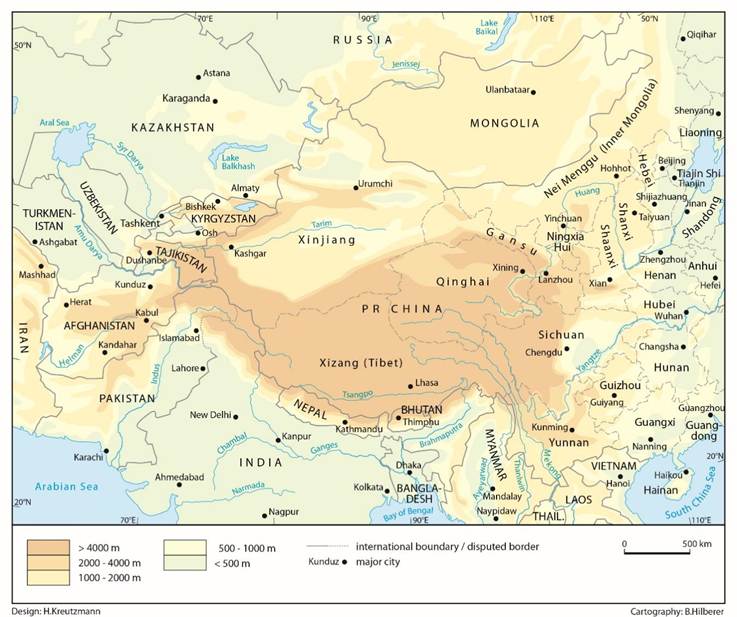
Fig. 1 Inner Asian rangelands can be perceived as vast areas of steppe and mountain plateaux interspersed by extensive semi- and desert environments. Their adaptability for pastoralism significantly varies by offering highly differentiated pasture potential (adapted from Hermann Kreutzmann 2012: 330)
In our paper we shall limit our focus to the Inner Asian deserts, steppe and plateaux regions in which we find an extensive area between major population centres such as China in the North and East, and Russia in the North and West, and Pakistan and India in the South. Although steppe zones and semi-deserts suitable as pastures occupy the biggest parts in an area where the mountain ranges of the Pamirs, Hindukush, Karakoram, Tien Shan, Altay, Kunlun Shan to the Himalayas (Fig. 1) structure the setting in the altitudinal dimension while major deserts in the lowlands reach the aridity threshold.
In certain locations the share of spaces suitable for grazing herds covers as much as half the areal size. In China, the Qinghai-Tibet Plateau offers 56.6% of its surface as suitable for pastoralism which provide the foundation for the livelihood of 4.7 million pastoralists.[11] Pastoral spaces of the Inner Asian steppes in Afghanistan (89%), Kazakhstan (69%) and Mongolia (70%) predominate spatial attributions in their respective countries; comparatively less so in Tajikistan (23%) and Kyrgyzstan (49%).[12] The enormous size of these extensively used spaces by scattered communities reflects its importance in the respective countries and the vast potential external investors and land grabbers might envisage.
Private entrepreneurs and public institutions and agencies compete with local communities over access to ‘natural’ resources. In order to exploit their hidden treasures, they have expanded their activities and fixity into these remote zones from lower altitudes by shifting spaces for permanent habitations upwards, by establishing hydraulic installations for mega dams and isolated mining towns for mineral-based extractive industries or by cultivating steppe and semi-desert zones for irrigated and rain-fed crop-farming at a large scale. The major irrigated areas of India’s and Pakistan’s Punjab provinces are as much evidence for land conversion and valorisation as the major attempt to convert into rain-fed farmland large parcels of steppe zones in Dasht-i Qipchaq (Kazakhstan) up to the borders of Western Siberia.[13] These early adopters have been followed by a number of Central Asian republics and Afghanistan to cultivate large tracts along river valleys in the Bactrian plains, Khorassan, Khorezm, Mavarannahr (between Amu and Syr Darya), and the Fergana Valley.[14] All these areas that are now marked as cultivable had been larger pastoral spaces in earlier times. Infrastructure development of roads and large dams, and the expansion of mining and prospecting areas for all kinds of extractive industries have entered into former isolated spaces mainly reserved or solely utilised by pastoralists. Mobility patterns of pastoralists had to be adjusted and modified; some shifts took place with relocation to new destinations sometimes accompanied with growing competition with other communities, enhanced insecurity, higher grazing taxes and dependence on powerful autocratic rulers. These shrinking spaces can be perceived as visible expressions of change and transformation that have left their marks in the cultural landscape at the fringes of the ecumene. In addition, changes in climate and weather conditions have affected environmentally sensitive and vulnerable areas in terms of less or highly variable water, snow and ice availability in high mountain regions that impact vegetation cover and fodder availability. Shifting altitudinal ecological zones can detrimentally affect accessible spaces for pastoral practices.
Social changes such as less workforce availability due to transformed educational structures and occupational patterns call for permanent adaptation of rules and regulations within pastoral communities. Being exposed towards powerful neighbours and their demands for grazing taxes and threats to autonomy as well as being dependent on food and goods exchange with markets in their vicinity, pastoralists had to be flexible, not only in their movements and shifting to suitable rangelands, but as well in adapting to environmental, political and social challenges. These constraints contributed to their vulnerability and interdependency. The twentieth century has brought major revolutionary transformations to pastoral communities when modernisation-theory inspired policies promoted sedentarisation of nomads, making a point of characterising settled lifestyles as the natural transition to modernity in opposition to inherited practices of mobile communities. This included shifts from resource-oriented practices to an agriculture dependant on high external inputs from irrigation, mechanisation, mineral fertilisers and chemical plant protection. Inherited systems of combined mountain agriculture were stigmatised as being backward and traditional. The pastoral component as producer of animal manure for fertilising on the supporting hand, and consuming harvest residues as fodder on the receiving end was increasingly ignored as an adaptive and sustainable strategy of utilising locally available resources at a nominal cost. All these processes contributed to shrinking pastoral spaces ranging from encroachment into fertile grazing grounds to abandoning valuable fodder resources. The scope of adaptation and the dimensions of transformation will be presented in a case study. Kazakhstan is a prime example of external interventions that have posed a threat to the survival of pastoralism as an occupation and livelihood.
3. Focus on Kazakhstan
Kazakhstan is endowed with vast land areas that have attracted agricultural planners over time for utilising these land resources for the benefit of a comparatively small population. Rarely there are countries in the world with such a high per capita land area available. Its spatial heterogeneity and geographical location between the forest zone of Western Siberia in the North and the desert zone of the Kara Kum and Hunger Steppe in the South leading towards the southern middle mountain areas of Karatau and Alatau and the eastern high mountain regions of Tien Shan, Jungarian Alatau and Altai provide a diverse area of steppe conditions. A different position is occupied by the area between Lake Balkhash, Jungaria and the Tien Shan, conventionally known as Yeti-Su, the land of seven rivers, or in Russian as Semirechie. Here rivers play a major role, the hydraulic resources are supplied from the southern mountains.
These different ecological zones stretching from sandy deserts with bushy shrubs and spring bulbs to grassy steppes and mountain meadows allowed adaptive pastoral practices.[15] They have taken advantage of diverse environmental conditions that offered ample opportunities for utilisation strategies that take into account seasonality of varying temperatures and vegetation cover with altitudinal and latitudinal position. Diversity in a vast area that can be covered by animal and human mobility has posed an asset to adapt to changing climatic and social conditions. For five millennia pastoral practices have been a prime strategy for human survival in Central Asia. Major changes in resource utilisation occurred since the 17th century CE; transformations and transitions were accelerated since then. Even today international organisations primarily identify Kazakhstan as characterised by populated and remote rangelands.[16] This extensive form of animal husbandry is contrasting with a small number of oases, in which irrigated agriculture is practised.[17] Consequently, it was not surprising that Kazakhstan had been the target of Soviet planners for major land management campaigns in order to solve its prevailing nutrition crisis. Kazakhstan’s endowment with potential agricultural lands of 214 million hectares, of which 119 million hectares are presently regarded as pastures and 29 million hectares as arable have made both a target region for domestic development programmes as well as for land grabbing processes and foreign direct investment in agricultural production. Kazakhstan’s agriculture is underperforming as land is underutilised; agriculture contributes only five percent to its gross domestic product (GDP) although nearly one quarter of its population is engaged in agricultural practices.[18]
3.1 Kazakhstan as a prime example for shrinking pastoral spaces in an ecologically sensitive environment
The region now occupied by Kazakhstan has been instrumentalised as a laboratory for agricultural and socio-political experiments. First, the sedentarisation programmes in the aftermath of the Russian October Revolution and Stalin’s agricultural reform campaigns gave a significant blow to pastoral practices and its decline and downfall during the 1930s. Second, Khrushchev’s agricultural expansion and modernisation attempt starting 70 years ago in 1954 converted steppe into vast tracts of agricultural lands in a very short span. During six years of the ‘virgin lands campaign’ 300,000 new settlers from European Russia immigrated into northern Kazakhstan, 25 million hectares were cultivated and ploughed, and about 13 million hectares were devoted to wheat crops.[19] Between 1953 and 1969 Kazakhstan’s grainfields increased sixfold, these quick jumps came along with the toolbox of modernisation. Newly founded state farms (sovchoz) predominantly organised the crop cultivation based on scientific methods in seed production and division of labour among professionals who were specialised in mechanised ploughing and harvesting. Mechanisation, plant research, introduction of chemical fertilisers to compensate fading soil fertility, and pest control augmented the arsenal. Subsequently these efforts could not avoid an environmental disaster of huge dimensions especially in ecologically sensitive areas in terms of aeolian, chemical, hydraulic and thermic processes. The exposure of harvested fields to wind and water erosion had severe detrimental effects appearing as loss of topsoil and its accumulation in sand dunes and depletion of wide areas into bare lands.
The drying-up of the Aral Sea (Fig. 2) exposed salty soil to the surface that could not be utilised for cultivation or be re-vegetated; salt-enriched sands blown-out from the former lake floor detrimentally affected wide areas as the dust-storms reached far into the East. Salinisation is another factor that reduced soil fertility and productivity in irrigated areas when groundwater tables were rising and the salt content in the applied water increased.[20] During the Soviet period agricultural planning determined the agenda which led to the conversion of vast tracts of grasslands into cropped fields, to significant increases of cereal and fodder production, and to preservation and storage of animal feed in support of an increasingly stationary animal husbandry. Beyond ecological degradation and desertification, the combination of central planning and forceful intervention in all walks of life did not only affect the economic and political dimensions, but strongly influenced social setups, community practices, the preservation of ecological knowledge and self-determined pastoral practices.
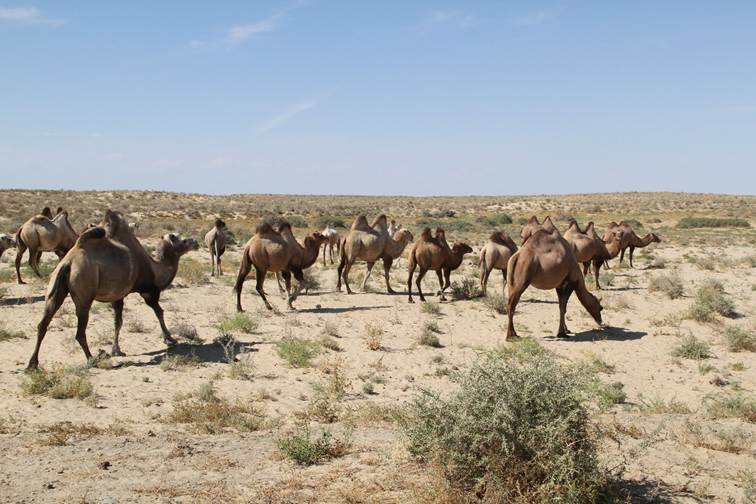
Fig. 2 The former Aral Sea has become the Aral Kum desert. The lake bottom nowadays appears as rangelands with halophytic steppe vegetation and is used by pastoralists. Photograph 7 August 2012
© Hermann Kreutzmann
3.2 Agricultural and pastoral competition and conflict in the Central Asian steppe region
Vast areas of the steppe zone offer fertile soils devoid of sufficient water supply. Where irrigation from rivers is feasible agriculture might be possible if thermal, edaphic and topographical factors are favourable as well. Early settled agricultural populations originate from the second millennium BC in the steppe and desert zones as isolated and concentrated oases separated by vast stretches of territory from each other. Those areas were often controlled by mobile nomadic groups, which formed the arena of interaction between sedentary and mobile communities. Although exchanges and interdependencies between both might be stronger than often acknowledged, it is obvious that an ideological bias has been at work that prevails until today. Further south the concentration of permanent settlements increased and oases have been located in river valleys and deltas.
Kazakh as an ethno-linguistic category was representing the most numerous among various groups in the arid zones of Central Asia when efforts culminated to differentiate people and finally to found republics based on ethnonyms. The people that were denominated as Kazakh were perceived as a community that was scattered in the sparsely populated areas of Central Asia who were predominantly practicing pastoralism in which animal husbandry took the central role. Besides mobile livestock-keeping Kazakhs were engaged in economic activities that incorporated agriculture, fishing and trade. Pastoralists have always been in regular exchange with settled farmers or practiced the cultivation themselves. Three groups can be recognised: First, there have been pastoralists who lived in close symbiosis with oasis cultivators, their exchange patterns based on close and regular relations. Secondly, there have been pastoralists seasonally moving along meridional horizontal routes from North to South, and thirdly mountain pastoralists of the Altai and Tian Shan using seasonal favourable conditions during their vertical migrations.[21] Some authors link vertical migration patterns with Kirghiz and horizontal movements with Kazakh pastoralists in a plain categorisation.[22]
Because of its extensive grasslands suitable for pastures the Kazakh space was perceived as suitable ground for scattered mobile populations who pursued pastoral practices that distinguished them from settled oases. Yuri Bregel[23] summarised the developments as formation of the Kazakh who ‘were, for the most part, not only the successors, but in many cases the direct descendants of the previous nomadic inhabitants of the Dasht-i Qïpchak’. He highlights the relationship with the ethnonym Qipchak and stresses the fact that Kazakh and pre-Kazakh community names are found among the neighbouring Kirghiz and Uzbeks as well and that this might hint to common historical roots. In fact, during the 19th and early 20th century the term Kirghiz often included what we know latest since 1925 as Kazakh. The term Kara-Kirghiz seemed to be more specific for present-day Kirghiz communities. Tribal affiliations and lineage compositions have been discussed very often during the last century and are not discussed in depth here.[24] For our topic it is more important to talk about the settlement history and the displacement, shrinking of pastoral spaces and rangelands, shifts and territorial occupations thereafter. After founding an Uzbek-Kazakh confederation in the 15th century, its realm had expanded to the North and West. Gradually it was confronted with the Russian expansion into Siberia. Following some push-backs from the northern fertile pastures, a new expansion took place after the defeat of the Junghars by China in 1758/59.[25] Statistical surveys about the Kazakh population and its spread commenced in the 19th and 20th centuries coinciding with the Russian expansion into the Dasht-i Qipchak, their territorial annexation and establishment of fortified garrisons and permanent settlements. During these periods the foremost occupation of Kazakhs was long-distance pastoralism with annual migrations spanning 100 up to 1,500 kilometres depending on landscape and territory, accessibility and restrictions, climatic and political circumstances. In terms of property, agricultural fields were owned by households, while summer pastures in the northern steppes were regarded as collective or common property and winter pastures mainly were managed according to community rules.
Leverages mentioned in all four dimensions have left their mark in this transitory period. The Russian occupation of the northern grasslands and subsequent territorial control and boundary-making in the 19th century deprived the Kazakhs of some of their most fertile grazing grounds. After 1868, the Russian colonial administration declared all land as state property, thus expropriating the former owners of scattered pastures and gave land in usufruct to pastoralists. Especially land in the northern parts, the summer pastures of Kazakh herders, were confiscated in order to accommodate Cossacks and Russian peasants to be settled there.[26] Along with these politically-motivated interventions a first attempt was made to intervene in economic and social dimensions by fixing migration routes and controlling mobility through imposed taxes. Niccolò Pianciola[27] summarised the crucial developments:
The immigration of Slavic peasant settlers from Russia and Ukraine in the period 1892–1914 changed the economy of the Steppe. Peasant immigration had three main consequences: in the areas of major peasant settlement, Kazakhs were deprived of the best lands; their pastoral movements were constrained; and they were led to rely in a significant way, for their subsistence, on trade with the peasants.
The occupational difference and root of distinction and stigmatisation is obvious if figures are compared: According to the census of 1897, the Akmolinsk, Ural, Turgaj and Semipalatinsk oblast of the Kirgizskij Kraj, a significant share of contemporary Kazakhstan, had a population of about 2.5 million inhabitants out of which 77.2% were categorised as Kazakh; three years later a follow-up enumeration identified 72.1% as ‘nomad’ in contrast to 20% Russian and Ukrainian settlers who belonged to 20.8% settled population.[28] The converted steppe lands had become another bread basket of the Russian Empire, shifted Central Asian grain production northwards and opened up existing oases for an increased cotton production in the fertile river valleys and deltas. These processes left lasting traces in the composition of the population and its perception. The categorisation measures were precursors to the creation of ethnonymous Central Asian republics during subsequent Soviet rule.
3.3 Emergence of Kazakh nationhood and its impact on pastoralism
To modernise an economy, society and built environment was one prime objective of collective efforts during Soviet rule. Ideology-inspired policies and technology-based strategies developed and applied have left their mark and are still a dominating feature of transforming a country from a planned economy to a market-driven one, from a dominating primary sector with agriculture and extractive industries to a services-oriented society. The creation and invention of nationalities is one central aspect of establishing Central Asian republics, shaping their economy and society, thus contributing to major transformations in the pastoral sector. The applied development model was embedded in Stalinist modernisation programmes that materialised in lasting imprints on people.
In reaction to the severe agricultural and supply crises a new phase of decolonisation, though short-lived emerged as part of the Soviet New Economic Policy (NEP). It turned the fate of tens of thousands of Slavic settlers who were expropriated and forced to leave for other destinations. It was a shift back from grain cultivation to grasslands, from restricted movements to re-opening-up traditional migration routes. Russian scholars investigated the economic potential of the Kazakh steppes and concluded that pastoral practices were best adapted to use its natural wealth. The Russian outpost Vernyi was renamed Alma-Ata in February 1921[29]:
Officially, nomadism was there to stay for a long time, even if eventually it would have been marginalized by the expansion of agriculture and industry. The new ‘Regulations for the land settlement of the nomadic, semi-nomadic, and sedentarizing population’ of Kazakhstan, issued in April 1924, provided tax breaks, subsidized credit, and material aid for households deciding to abandon nomadism. At the same time, the Regulations explicitly excluded any form of coercion.
Ethnicity played a role: Kazakhs were given priority in occupying land property and being entitled to water rights; further immigrants were officially prohibited to enter the steppe region. These nationality policies (natsional’naia politika) were strengthened by the so-called ‘nation delimitation’ in Central Asia in 1924 which was envisaged as the solution to the ‘nationality question’ (natsional’nyi vopros), highlighting the challenge of controlling the diversity of Central Asian people. The invention of titular nationalities was based on ethnonyms for forming socialist republics, and affirmative action for the uplift of ‘backward’ nationalities including the creation and formation of nationality cadres.
The most visible outcome of the early reforms in the framework of decolonisation was the termination of the Turkestan Autonomous Soviet Republic and the formation of a new republic – composed of basically most of the Syr Darya and Semirechie provinces with its Kazakh ethnic majorities and the Kirghiz republic – which was renamed as Autonomous Soviet Socialist Republic of Kazakhstan in February 1926.[30] This path to development was interrupted in November 1927 when during the ‘Sixth Regional Communist Party Conference’ the end of the decolonisation period was fixed by targeting on the social classes among the Kazakhs. The Kazakh elite was to be expropriated and eradicated by deporting them and their families, thus weakening tribal solidarity structures within the community. The end of decolonisation was aggravated by forced grain procurement and growing repressions. Another outcome of these harsh interventions was the renewed permission for outside settlers to migrate to Kazakhstan. Without going into further details the abrupt end of the decolonisation phase again changed the population structure in Kazakhstan and prepared the phase of forced collectivisation, sedentarisation policies for mobile pastoralists, and confiscation of livestock.[31]
Table 1 Development of population and livestock numbers in Kazakhstan 1928 to 2023 (in thousands)
|
|
1928 |
1935 |
1980 |
1997 |
2012 |
2023 |
|
human population |
6,200 |
6,150 |
14,680 |
16,043 |
16,675 |
20,330 |
|
sheep and goats |
19,169 |
2,610 |
35,067 |
13,679 |
18,092 |
21,785 |
|
cattle |
6,534 |
1,830 |
8,337 |
5,424 |
5,702 |
8,538 |
|
horses |
3,544 |
420 |
1,243 |
1,310 |
1,607 |
3,856 |
|
camels |
744 |
72 |
121 |
111 |
173 |
259 |
|
pigs |
252 |
276 |
3,105 |
1.036 |
1,204 |
705 |
Source: Data adapted from Bureau of National Statistics Kazakhstan (https://stat.gov.kz/en/industries/business-statistics/stat-forrest-village-hunt-fish/publications/38923/; last access 15 December 2024); Ferret (2018: 510); Giese (1982: 225); Khazanov (2012); Konuspayeva and Faye (2020: 219); Pianciola (2019); human population data for 1926, 1939, 1979 respectively.
More than half a million Kazakh households were forced to permanently settle down and to become members of collective farms (kolchoz) and state farms (sovchoz); the same applied to the farmers and members of other nationalities. These external interventions faced strong opposition from the Kazakh community which led to a severe crisis with detrimental effects on the well-being of the people, economic downfalls, loss of livestock as the primary household wealth. The decline and growth of livestock numbers reflect the developments. Before the Russian Revolution, the total number of sheep and goats, cattle, horses and camels ranged around 30 million heads, which by 1933 had reached their lowest point of a few thousand heads. It took until the end of the 1950s and mid-1960s to recover from this loss; cattle, sheep and goats reached similar values while camel and horses continued to stagnate for long at about one fifth of their numbers in 1928.[32] Surprisingly, the present figures have reached the same order of magnitude a century after the peak numbers (Table 1). From a pastoral perspective, this was the most serious political intervention imaginable, which set the Kazakh economy and society back significantly. Such a low point in socio-political experiments is remembered as the collapse of the livestock sector with dramatic consequences.
3.4 Mass exodus as response to interventions in the pastoral realm
The final outcome was the exodus of hundreds of thousands of Kazakhs to the East towards Afghanistan, China, and British-India. The demographic factor is showing in the population data. Between 1926 and 1939 the share of Kazakhs declined from 58.5% to 37.8%, in total numbers a loss of one third of the Kazakh population while the share and total number of Russians doubled during the same period. For the first time Russians outnumbered Kazakhs in the republic. Adaptations and modified migration routes were the result of these events, but the major political transformation occurred when Kazakhstan emerged as a republic after the national delimitation. To conform with the target of national and territorial delimitation and to counteract pan-Turkic movements, the Governorate-General of Turkestan was terminated with a view to creating eponymous republics, each ideally having a homogeneous national population. The Turkestan Autonomous Soviet Socialist Republic was therefore divided up into six subregions, the People’s Republics of Bokhara and Khiva were split up, and their respective populations were added to three of the six newly created administrative units. Redistribution measures affected an area of 1.75 million km² and a total population of almost eight million people. Subregions of the Turkestan Autonomous Soviet Socialist Republic (population 5.08 million), chosen according to ethnic criteria, went to the newly founded republics of Uzbekistan (49.6% of the population), Turkmenia (10.5%), Kazakhstan (18.3%), Tajikistan (9.1%), Kara-Kyrgyzstan (8.8%) and Kara-Kalpakia (3.7%).[33] Among the newly created republics Kazakhstan was the entity where the eponymous population had the smallest share which would shrink further in favour of Slavic immigrants. These developments would be reinforced due to the forceful sedentarisation programmes within the Soviet Union during the 1930s. These so-called reforms and modernisation programmes caused one of the most traumatic experiences in Kazakhstan between 1930 and 1933, when famine and starvation became widespread phenomena.[34]
Eventually, one-third of the Kazakhs, or 1.3–1.5 million people, died from starvation and epidemic diseases (mostly typhus), while possibly just under 10 percent of the Slavic population of the region perished during the famine. Procurement plans decided in Moscow shaped the magnitude of the famine and ensuing mass death, even though a drought in northern Kazakhstan in 1931 was a contributing factor.
The centrally designed plans for future economic activities resulted in spatial allocations of tasks and duties to certain nationalities such as the Kazakh and Kirghiz and aggravated the disaster by underestimating environmental and social conditions.[35] The loss of lives was immense and tragic, in addition to the people who died on the spot, certain communities tried to leave the country and fled East. Among those who crossed the borders and attempted to cross the Himalayan Mountains as well the human loss was extremely high.
Recovery from this catastrophe that caused death, deprivation of wealth assets, forced changes of settlement and professional practices, and collectivisation and administrative restructuring was not an easy affair. While the population figures ranged at a similar level in the 1939 census with about 6.15 million inhabitants, the economic loss of the centrepiece of Kazakhstan’s economy, i.e., the animal husbandry would not recover for long.[36] While the livestock numbers fell from 1928 to only one tenth and its lowest value by the mid-1930s it took 30 years after 1928 to reach the same level of sheep and goat numbers again in 1958, for cattle it lasted until the mid-1960s, and the numbers of camels and horses never recovered from that loss.[37] It is only one evident expression for the human catastrophe and socio-economic failure that caused the traumatic condition afterwards. Other subsequent economic experiments did not take such a toll in human lives, and never again Soviet authorities tried to abolish mobile pastoralism, although the outcome of these interventions significantly changed pastoral practices in terms of sedentarisation, migration and mobility, and in socio-economic structures and collective setups.
The human loss, the displacement of people, the expropriation of hereditary rights and abolishment of community practices are strong indicators for a tragedy of responsibility and tragedy in the commons. The shrinking of pastoral spaces has been more than only a process in space and time. A fragile ecological balance was disrupted, and the abandonment of grazing led to a variety of undesirable secondary vegetation effects and pasture degradation. The shrinking of pastoral spaces involved both limited scope for decision-making by hereditary actors and the need to change economic practices by force. The involuntary transformation of social norms and community principles had a long-lasting effect and impaired economic development opportunities and political participation. These dramatic interventions led to long periods of extreme hardship, severe hunger and human deprivation. It basically took two generations just to compensate for the material losses and the recovery of animal herds.
3.5 Future developments of pastoral practices in Kazakhstan
Kazakhstan is a vast and rich country with a number of natural endowments in terms of hydraulic and agricultural assets, soil structure and grasslands, mineral and fossil resources (Table 2). These factors have played a changing role in Kazakhstan’s history. In olden times Kazakhstan was mainly recognised for its pastoral potential and its livestock production. Popular beliefs and cultural practices linked to a nomadic heritage are omnipresent in Kazakh folklore and epic poetry. Living in harmony with nature, a reflection of collective conventional knowledge elevated to pastoral wisdom, and the disaster challenges, namely dzud, storms, droughts, floods and mudflows, play an important role in pastoralists’ challenges with their ecological environment and shaping their economic performance. Kazakh pastoralists have proven that the two dimensions of ecology and economy are strongly influencing adaptation strategies and how decisive the maintenance of traditional knowledge in pastoral practices can be. The literary representation of disaster experiences has shaped the personal perception of environmental features, in which dzud plays the most threatening role.[38] Coping strategies rely partly on earlier experiences and adaptive practices that have been incorporated into pastoral life-styles. The perception of environmental threats is growing.
Table 2 Ecological zones and regional attributions in Kazakhstan
|
Ecological zone |
Regional attribution |
Land area |
Currently used grazing area in % |
|
Steppe |
Northern moist steppe |
15,670 |
20 |
|
|
Steppe |
20,590 |
30 |
|
|
Dry steppe |
45,970 |
30 |
|
|
Eastern steppe |
4,780 |
30 |
|
Semi desert |
|
36,250 |
30 |
|
Desert |
|
103,930 |
50 |
|
Piedmont |
Piedmont |
3,700 |
15 |
|
|
Dry piedmont |
16,290 |
10 |
|
|
Eastern piedmont |
5,020 |
10 |
|
Mountain |
|
8,060 |
35 |
|
River flood plain |
|
390 |
10 |
|
Total |
|
260,650 |
95,220 hectares (= 36.5%) |
Source: Schillhorn van Veen, Almaev and Utkelov (2004: 13)
Since independence herd mobility has re-emerged as a strategy to flexibly adapt to changing climatic and weather conditions such as drought, ice storms (dzud), fire, weeds invasion, locust plagues, wind and water erosion, salinisation, and man-made factors such as depositing radioactive, military and space programme-related waste. The loss of Kazakhstan’s rangelands due to these environmental risks has been estimated at approximately one hundred million hectares, which is four times the area converted under the Virgin Lands campaign.[39] Both represent significant factors in the shrinking of pastoral spaces, albeit rooted in different causes. Kazakhstan as a whole has repeatedly functioned as a testing ground for all kinds of technological experiments which have reduced the available space for ‘classical’ agricultural activities and which have frequently forced farmers and herders to develop dynamic strategies for flexible adaptation.
Thus, a linkage exists to path-dependency which in the Kazakhstan case is strongly influenced by Kazakh’s historical dramatic and tragic experiences which have left significant marks in the society and its degrees of freedom to change. The political and social dimensions have been most strongly shaped by external interventions, authoritarian rule and the implementation of coercive social transformations. The Kazakhstan case has shown significant changes in all four dimensions highlighted above, which led to expected outcomes such as landscape degradation and desertification, shrinking pastoral spaces, effects of modernisation and sedentarisation, and growing social inequalities. Their exemplification shows commonalities with socio-political developments that have taken place elsewhere in Central Asia. At the same time Kazakhstan represents some unique features that are strongly linked to the heritage of Kazakh people and its recent transformations.
The hiatus after the dissolution of the Soviet Union when collectively-owned livestock was distributed among kolkhoz and sovchoz members had resulted in a major decline of livestock numbers during the privatisation campaigns in the 1990s (see Table 1). In recent years growing herds of cattle, sheep and goats are herded again and their owners follow a similar pattern of mobility, supported by modern infrastructure, such as transporting their equipment on trucks. In the ecological dimension we can observe persistent mobility patterns by selecting appropriate pastures.[40] In the economic and social dimensions major changes can be observed ranging from habitation arrangements (houses and yurts) in summer and winter quarters to shifts in the division of labour between educated household members and hired salaried shepherds. This transformation has been aptly described as “from clans to workers to ranchers.”[41] Marketing practices have significantly changed in present-day Kazakhstan society as well as demands in a growing and affluent market. The political dimension is laid-out in pasture laws, leaseholds of grazing areas and related rules and regulations including taxation. The transformation is well captured in the observation that “within one century, the predominant form of pastoralism has changed from quasi-nomadism to quasi-sedentarism.”[42] Path dependency is evident, as traits rooted in Kazakh heritage and the Soviet legacy continue to shape both outcomes and present performance.
Although animal husbandry has lost its overall importance for Kazakhstan’s economy and provides employment to less people, pastoralism is very much alive and contributes to the country’s domestic consumption patterns; cattle, sheep and goats play a dominant role in the northern and south-eastern regions (oblast) of the country (Fig. 3).[43]
Since independence pastoral legislation has been amended in 2003 when the ‘Land Code’ permitted leasehold of pastures for 49 years or their purchase as private property. In 2017 a ‘Law on Pastures’ was introduced that aims at regulating pasture access adapted to the needs of the Kazakhstan Vision projects; i.e., favouring large-scale herd owners with heavy subsidies and ignoring the small herders.[44] Such an approach is a logical continuation of the envisaged modernisation programme on its way to ‘economies of scale’. Pastoralism has undergone significant and often disastrous transformations. Although shrinking spaces for pastoralists are the rule of the day, there has remained an important contribution to the country’s wealth generated from its rangelands.
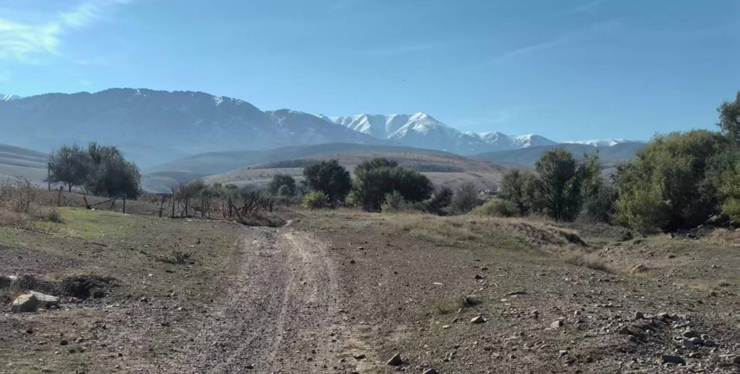
Fig. 3 Winter pastures near Ashybulaq village, Almaty Oblysy. Photograph October 2024 © Mayinu Shanatibieke
4. Conclusion: implications for pastoralism in shrinking spaces
The presented evidence from Kazakhstan has shown the severity and long-lasting effects of external interventions in the pastoral realm. As pastoralists have always been part of larger exchange systems and market constellations it was not surprising that expanding empires and imperial desires of control and domination have contributed to shrinking spaces. In recent years the power games have been augmented by ecological considerations that have stigmatised pastoralists as agents and culprits of environmental degradation. Economic arguments of fostering rural uplift and promoting further market integration have been taken up by agenda-setters and policy-makers who followed the spirit of modernisation theories. The same conceptual background has been the driving force for changing the social organisation in other pastoral communities. The examples presented here stem from ideology-inspired modernisation programmes in autocratic societies where top-down development from central authorities has been the rule. Looking at neighbouring countries such as Kyrgyzstan and Tajikistan we find similar strategies as in Kazakhstan.[45] Afghanistan is a contested country where pastoralists have been of significant influence in state rule and of importance in economic terms.[46] Nevertheless, the shrinking of pastoral spaces takes place there as well as in South Asian societies such as India, Pakistan, and Nepal where pastoralists are rather side-lined and where even grazing policies and pasture laws are next to non-existing. Bhutan is kind of an exception in recent years where well-endowed initiatives and government support schemes try to keep shepherds in adequate high mountain livelihoods and discourage abandonment of inherited pasture settlements.[47] Shrinking pastoral spaces can be observed everywhere, ecological degradation is one of the most popular arguments for advocating societal reforms and economic interventions. Abandoning cultural landscapes does not necessarily invoke a return to nature or earlier environmental conditions. The succession vegetation of previously cultivated and grazed lands could be an undesirable plant population that creeps in and displaces valuable forage plants.
Major interventions in the agricultural sector have shaped the Kazakhstan experience from which policy makers could learn. Too often pastoral communities and their realm have been taken as a laboratory for all kinds of experiments with counter-productive effects and detrimental outcomes for individual households. The shift from grasslands to grain cultivation and back has shaped their policies and frequently caused severe economic losses and social disasters forcing individuals to give up their profession. A common theme is the non-involvement of the affected communities in any form of decision-making which might be one explanation for the regular failures of development packages.
The question remains: Are there any alternatives for dealing with obvious degradation in certain places and with the preservation of natural and cultural landscapes? Pastoral strategies have proved over centuries that a place-based resource can be utilised in a sustainable manner. If we are confronted with a question of scale when it comes to environmental degradation then other options could be useful tools in tackling the challenges and constraints. The payment for ecological services could be an attempt to improve the living conditions of pastoralists by leaving them where they are.[48] Payment for ecological services involves the reduction of flocks to an acceptable herd size that allows sustainable management of pasture resources. The difference between present high stocking quotas and acceptable ones would be paid in cash to the herdsmen by government authorities. This could amount to about a third of the pastoralists’ household income. The indigenous knowledge accumulated by pastoralists over many generations seems too valuable to be just neglected or omitted.[49] One approach from the ‘role model’ China is linked to ‘rural revitalisation’. It can be perceived as a strategy to optimise the use of local resources in a comprehensive manner. Food processing plants, new cooperative arrangements, and scientific animal breeding and fodder generation are a few measures to exploit the given local and regional agricultural and pastoral potential.[50] In general, policies contributing to the shrinking of pastoral spaces illustrate a tendency to promote top-down development and slink back to growing state control, which will increasingly limit farmers’ and pastoralists involvement in decision-making and resource utilisation options. Every society has to decide how to deal with the situation of inequality if the stipulated aim is to mitigate the effects of social exclusion. Thus, valuable indigenous knowledge, which regional planners nearly always lack, could be harnessed to tackle not only ecological challenges, but also a complex constellation that requires holistic and sensitive approaches for the benefit of pastoral communities.
Figures and tables
Fig. 1 Inner Asian rangelands can be perceived as vast areas of steppe and mountain plateaux interspersed by extensive semi- and desert environments. Their adaptability for pastoralism significantly varies by offering highly differentiated pasture potential © Hermann Kreutzmann (adapted from Hermann Kreutzmann 2012: 330)
Fig. 2 The former Aral Sea has become the Aral Kum desert. The lake bottom nowadays appears as rangelands with halophytic steppe vegetation and is used by pastoralists. Photograph 7 August 2012 © Hermann Kreutzmann
Fig. 3 Winter pastures near Ashybulaq village, Almaty Oblysy. Photograph October 2024 © Mayinu Shanatibieke
Table 1 Development of livestock numbers in Kazakhstan 1928 to 2023 (in thousands)
Table 2 Ecological zones and regional attributions in Kazakhstan
[1] Miller (2008); see Barfield (1993); di Cosmo (1994); Khazanov (1994); Kradin (2018); International Livestock Research Institute (2021); Salzman (2004).
[2] See Bumochir (2017); Cameron (2020); Harris (2010); Kreutzmann (2024); Mirzabaev et al. (2016); Nyima (2015); Ptáčková (2020); Yeh et al. (2017); Zhaoli et al. (2005).
[3] See Fairhead, Leach and Scoones (2012).
[4] See for example Doerre (2017); Naess (2013); Squires, Shang and Ariapour (2017); Steimann (2012); Wang et al. (2017).
[5] See Cameron (2018); Degen and Dana (2024); Kreutzmann (2015; 2024).
[6] Scott (1998: 1).
[7] Engebrigtsen (2017: 43).
[8] See Cook and Butz (2021); Malhotra, Nandigama and Bhattacharya (2022); Naess (2021); Singh and Kerven (2023).
[9] See Cameron (2020); Frachetti et al. (2017); Kradin (2018).
[10] International Livestock Research Institute (2021: 8); Sheehy, Miller and Johnson (2006: 142).
[11] Zhao Xinquan (2023).
[12] Jacobs, Schloeder and Tanimoto (2025: 391-392); Kerven, Robinson and Behnke (2011: 13); Sharpe et al. (2022: 18).
[13] See Bregel (2003), Cameron (2018); Ferret (2018); Galvin et al. (2008); Kreutzmann (2013); Pianciola (2019), Shanatibieke (2016).
[14] See for map references and the identification of places Bregel (2003: 3); Doerre (2017); Prior (2024) and Kreutzmann (2015).
[15] Kerven, Robinson and Behnke (2021).
[16] International Livestock Research Institute (2021: 19).
[17] Flermoneca (2015: 43).
[18] Petrick, Raitzer and Burkitbayeva (2018).
[19] Cameron (2020); Kamp et al. (2011: 2607); Petrick (2014: 2).
[20] See Xenarios et al. (2020).
[21] Humphrey and Sneath (1999); Pianciola (2019).
[22] Khazanov (1994: 44-50).
[23] Bregel (2003: 76).
[24] See for details map in Bregel (2003: 77); Bacon (1966: 116-150); Finke (2018).
[25] See Bregel (2003: 76 and map 30).
[26] Demko (1969).
[27] Pianciola (2019: 2).
[28] Giese (1982: 221).
[29] see Pianciola (2019: 5).
[30] In 1936 it became a Union Republic; with these administrative reconfigurations the compact territorial unit emerged that has become after independence the country of more or less the same shape by the name of Kazakhstan.
[31] See Cameron (2018); Khazanov (2012); Pianciola (2019).
[32] See for more details Ferret (2018: 509); Giese (1982: 224).
[33] See Kreutzmann (2015: 371).
[34] Pianciola (2019: 9).
[35] Pianciola (2017).
[36] See Khazanov (2012); Pianciola (2019).
[37] Ferret (2018); Giese (1982: 224).
[38] Tulemissov et al. 2025; see as well earlier references in Cameron 2018 and Humphrey and Sneath 1999.
[39] Schillhorn van Veen, Alimaev and Utkelov (2004: 17–18).
[40] The case study by Carole Ferret (2018: 511-521) provides details of persistence and change.
[41] Behnke, Robinson and Kerven (2021)
[42] Ferret (2018: 521).
[43] See the distribution map in Ferret (2018: 507).
[44] Kerven, Robinson and Behnke (2020: 11); Robinson (2020: 34).
[45] Doerre (2017); Robinson (2020).
[46] See Jacobs, Schloeder and Tanimoto (2015), Kreutzmann and Schuette (2011); Tapper (2008).
[47] See Luxom et al. (2022); Malhotra, Nadigama and Bhattacharya (2022); Singh and Kerven (2023); Wangchuk, Wangdi and Dorji (2023).
[48] Ning, Zhaoli and Tao (2012); Zhang and Shuhao (2022); Zhen, Gao and Jin (2024).
[49] See Miller (2002) who advocates the incorporation of pastoralists’ indigenous knowledge.
[50] Liu and Li (2017); Ptáčková (2024); Zhang et al. (2023).
References
BACON, Elizabeth Emaline. Central Asians under Russian rule: A study in culture change. Ithaca; London: Cornell University Press, 1966.
BARFIELD, Thomas Jefferson. The nomadic alternative. Englewood Cliffs: Prentice Hall, 1993.
BREGEL, Yuri. An historical atlas of Central Asia. Leiden; Boston: Brill, 2003. https://doi.org/10.1163/9789047401216
BUMOCHIR, Dulam. The afterlife of nomadism: pastoralism, environmentalism, civilisation and identity in Mongolia and China. In: AHEARN, Ariell; STERNBERG, Troy; HAHN, Allison (eds.). Pastoralist livelihoods in Asian drylands: Environment, governance and risk. Winwick: The White Horse Press, 2017, pp. 17–40.
CAMERON, Sarah. The hungry steppe: Famine, violence, and the making of Soviet Kazakhstan. Ithaca: Cornell University Press, 2018. https://doi.org/10.7591/cornell/9781501730436.001.0001
CAMERON, Sarah. Environmental approaches to Soviet Central Asia. In: LUDDEN, David (ed.). Oxford Research Encyclopedia of Asian History. New York: Oxford University Press, 2020. https://doi.org/10.1093/acrefore/9780190277727.013.295
COOK, Nancy; BUTZ, David. ‘The road changes everything’: shifting gendered mobilities, spaces and subjectivities in Shimshal, Pakistan. Gender, Place and Culture, 2021, 28(10), pp. 1408–1430. https://doi.org/10.1080/0966369X.2020.1811643
DI COSMO, Nicola. Ancient Inner Asian nomads: Their economic basis and its significance in Chinese history. The Journal of Asian Studies, 1994, 53(4), pp. 1092–1126. https://doi.org/10.2307/2059235
DEGEN, A. Allan; DANA, Léo-Paul (eds.). Lifestyle and livelihood changes among formerly nomadic peoples: Entrepreneurship, diversity and urbanisation. Cham: Springer, 2024. https://doi.org/10.1007/978-3-031-51142-4
DEMKO, George J. The Russian colonization of Kazakhstan, 1896–1916. Bloomington: Indiana University Press, 1969.
DOERRE, Andrei. Land, people and development interventions: the case of rangelands and mobile pastoralists in Central Asia. In: FISCHER-TAHIR, Andrea; WAGENHOFER, Sophie (eds.). Disciplinary spaces: Spatial control, forced assimilation and narratives of progress since the 19th century. Bielefeld: Transcript, 2017, pp. 65–89. https://doi.org/10.1515/9783839434871-004
ENGEBRIGTSEN, Ada Ingrid. Key figure of mobility: the nomad. Social Anthropology, 2017, 25(1), pp. 42–54. https://doi.org/10.1111/1469-8676.12379
FAIRHEAD, James; LEACH, Melissa; SCOONES, Ian. Green grabbing: a new appropriation of nature? Journal of Peasant Studies, 2012, 39(2), pp. 237–261. https://doi.org/10.1080/03066150.2012.671770
FERRET, Carole. Mobile pastoralism a century apart: continuity and change in south-eastern Kazakhstan, 1910 and 2012. Central Asian Survey, 2018, 37(4), pp. 503–525. https://doi.org/10.1080/02634937.2018.1484698
FINKE, Peter. Ethnicity of Turkic Central Asia. In: LUDDEN, David (ed.). Oxford Research Encyclopedia of Asian History. New York: Oxford University Press, 2018. https://doi.org/10.1093/acrefore/9780190277727.013.56
FLERMONECA. The state of the environment in Central Asia: Illustrations of selected environmental themes and indicators. Almaty: Flermoneca, 2015.
FRACHETTI, Michael D.; SMITH, C. Evan; TRAUB, Cynthia M.; WILLIAMS, Tim. Nomadic ecology shaped the highland geography of Asia’s Silk Roads. Nature, 2017, 543, pp. 193–198. https://doi.org/10.1038/nature21696
GALVIN, Kathleen A.; REID, Robin S.; BEHNKE, Roy H.; HOBBS, N. Thompson (eds.). Fragmentation in semiarid and arid landscapes: Consequences for human and natural systems. Dordrecht: Springer, 2008. https://doi.org/10.1007/978-1-4020-4906-4
GIESE, Ernst. Seßhaftmachung der Nomaden in der Sowjetunion. In: SCHOLZ, Fred; JANZEN, Jörg (eds.). Nomadismus – Ein Entwicklungsproblem? Berlin: Reimer, 1982, pp. 219–231.
HARRIS, Richard B. Rangeland degradation on the Qinghai-Tibetan plateau: a review of the evidence of its magnitude and causes. Journal of Arid Environments, 2010, 74(1), pp. 1–12. https://doi.org/10.1016/j.jaridenv.2009.06.014
HUMPHREY, Caroline; SNEATH, David. The end of nomadism? Society, state and the environment in Inner Asia. Durham: Duke University Press, 1999. https://doi.org/10.1163/9789004214071
INTERNATIONAL LIVESTOCK RESEARCH INSTITUTE. Rangelands Atlas. Nairobi: ILRI, 2021.
JACOBS, Michael J.; SCHLOEDER, Catherine A.; TANIMOTO, Philip D. Dryland agriculture and rangeland restoration priorities in Afghanistan. Journal of Arid Land, 2015, 7(3), pp. 391–402. https://doi.org/10.1007/s40333-015-0002-7
KAMP, Johannes; URAZALIEV, Ruslan; DONALD, Paul F.; HÖLZEL, Norbert. Post-Soviet agricultural change predicts future declines after recent recovery in Eurasian steppe bird populations. Biological Conservation, 2011, 144, pp. 2607–2614. https://doi.org/10.1016/j.biocon.2011.07.010
KERVEN, Carol; ROBINSON, Sarah; BEHNKE, Roy. Pastoralism at scale on the Kazakh rangelands: from clans to workers to ranchers. Frontiers in Sustainable Food Systems, 2021, 4(590401). https://doi.org/10.3389/fsufs.2020.590401
KHAZANOV, Anatoly M. Nomads and the outside world. Madison: University of Wisconsin Press, 1994.
KHAZANOV, Anatoly M. Pastoralism and property relations in contemporary Kazakhstan. In: KHAZANOV, Anatoly M.; SCHLEE, Günther (eds.). Who owns the stock? Collective and multiple property rights in animals. New York: Berghahn Books, 2012, pp. 139–158. https://doi.org/10.1515/9780857453365-008
KONUSPAYEVA, Gaukhar; FAYE, Bernard. Livestock systems in the midst of history’s upheavals in Kazakhstan. In: TOURRAND, Jean-François et al. (eds.). Livestock policy. Montpellier: Cirad, 2020, pp. 212–224.
KRADIN, Nikolay. Ancient steppe nomad societies. In: LUDDEN, David (ed.). Oxford Research Encyclopedia of Asian History. New York: Oxford University Press, 2018. https://doi.org/10.1093/acrefore/9780190277727.013.3
KREUTZMANN, Hermann (ed.). Pastoral practices in High Asia: Agency of “development” effected by modernisation, resettlement and transformation. Dordrecht: Springer, 2012. https://doi.org/10.1007/978-94-007-3846-1
KREUTZMANN, Hermann. The tragedy of responsibility in High Asia: modernizing traditional pastoral practices and preserving modernist worldviews. Pastoralism: Research, Policy and Practice, 2013, 3(7). https://doi.org/10.1186/2041-7136-3-7
KREUTZMANN, Hermann. Pamirian crossroads: Kirghiz and Wakhi of High Asia. Wiesbaden: Harrassowitz, 2015. https://doi.org/10.2307/j.ctvc76zjf
KREUTZMANN, Hermann. Pamirian crossroads and beyond: Human geography and geopolitics. Leiden: Brill, 2024. https://doi.org/10.1163/9789004704367
KREUTZMANN, Hermann; SCHÜTTE, Stefan. Contested commons – multiple insecurities of pastoralists in north-eastern Afghanistan. Erdkunde, 2011, 65(2), pp. 99–119. https://doi.org/10.3112/erdkunde.2011.02.01
LIU, Yansui; LI, Yuheng. Revitalize the world’s countryside. Nature, 2017, 548, pp. 275–277. https://doi.org/10.1038/548275a
MALHOTRA, Aayushi; NANDIGAMA, Sailaja; BHATTACHARYA, Kumar Sankar. Puhals: outlining the dynamics of labour and hired herding among the Gaddi pastoralists of India. Pastoralism: Research, Policy and Practice, 2022, 12(1). https://doi.org/10.1186/s13570-022-00237-5
MILLER, Daniel. The importance of China’s nomads: the sustainable future development of China’s rangelands depends on integrating nomads‘ indigenous knowledge. Rangelands, 2002, 24(1), pp. 22–24. https://doi.org/10.2458/azu_rangelands_v24i1_miller
MILLER, Daniel. Drokpa: Nomads of the Tibetan Plateau and Himalaya. Kathmandu: Vajra Publications, 2008.
MIRZABAEV, Alisher et al. Rangelands of Central Asia: challenges and opportunities. Journal of Arid Land, 2016, 8(1), pp. 93–108. https://doi.org/10.1007/s40333-015-0057-5
NAESS, Marius Warg. Climate change, risk management and the end of nomadic pastoralism. International Journal of Sustainable Development & World Ecology, 2013, 20(2), pp. 123–133. https://doi.org/10.1080/13504509.2013.779615
NAESS, Marius Warg. Collaborative foundations of herding: the formation of cooperative groups among Tibetan pastoralists. Journal of Arid Environments, 2021, 186 (104407). https://doi.org/10.1016/j.jaridenv.2020.104407
NING, Wu; YAN, Zhaoli; LU, Tao. Enclosure and resettlement in the Eastern Tibetan Plateau: dilemma of pastoral development during the last three decades. In: KREUTZMANN, Hermann (ed.). Pastoral practices in High Asia: Agency of “development” effected by modernisation, resettlement and transformation. Dordrecht: Springer, 2012, pp. 291–306. https://doi.org/10.1007/978-94-007-3846-1_16
NYIMA, Yonten. What factors determine carrying capacity? A case study from pastoral Tibet. Area, 2015, 47(1), pp. 73–80. https://doi.org/10.1111/area.12137
PETRICK, Martin. Sechzig Jahre Neulanderschließung in Kasachstan: später Erfolg eines zentralstaatlichen Entwicklungsmodells? Zentralasienanalysen, 2014, 77, pp. 2–9. https://doi.org/10.31205/ZA.077.01
PETRICK, Martin; RAITZER, David; BURKITBAYEVA, Saule. Policies to unlock Kazakhstan’s agricultural potential. In: ANDERSON, Kym; CAPANELLI, Giovanni; TANIGUCHI, Kiyoshi (eds.). Kazakhstan: Accelerating economic diversification. Manila: Asian Development Bank, 2018, pp. 22–72.
PIANCIOLA, Niccolò. Stalinist spatial hierarchies: placing the Kazakhs and Kyrgyz in Soviet economic regionalization. Central Asian Survey, 2017, 36(1), pp. 73–92. https://doi.org/10.1080/02634937.2016.1221380
PIANCIOLA, Niccolò. Nomads and the state in Soviet Kazakhstan. In: LUDDEN, David (ed.). Oxford Research Encyclopedia of Asian History. New York: Oxford University Press, 2019. https://doi.org/10.1093/acrefore/9780190277727.013.314
PRIOR, Daniel. Nomadic culture in Islamic Central Asia. In: LUDDEN, David (ed.). Oxford Research Encyclopedia of Asian History. New York: Oxford University Press, 2024. https://doi.org/10.1093/acrefore/9780190277727.013.315
PTÁČKOVÁ, Jarmila. Exile from the grasslands: Tibetan herders and Chinese development projects. Seattle: University of Washington Press, 2020. https://doi.org/10.1515/9780295748207
ROBINSON, Sarah. Livestock in Central Asia: From rural subsistence to engine of growth? Leipzig: IAMO, 2020.
SALZMAN, Philip Carl. Pastoralists: Equality, hierarchy, and the state. Boulder: Westview Press, 2004.
SCHILLHORN VAN VEEN, Tjaart W.; ALIMAEV, Ilja I.; UTKELOV, Bulat. Kazakhstan: Rangelands in transition. The resource, the users and sustainable use. Astana: World Bank, 2004.
SCOTT, James C. Seeing like a state: How certain schemes to improve the human condition have failed. New Haven: Yale University Press, 1998.
SHANATIBIEKE, Mayinu. The road to modernization: sedentarisation and its impact on the life and livelihood of Kazakh pastoralists in Xinjiang. Inner Asia, 2016, 18, pp. 135–151. https://doi.org/10.1163/22105018-12340057
SHARPE, Nicholas et al. Application of the participatory rangeland and grassland assessment (PRAGA) methodology in Kyrgyzstan. Rome: FAO, 2022.
SHEEHY, Dennis P.; MILLER, Daniel; JOHNSON, Douglas A. Transformation of traditional pastoral livestock systems on the Tibetan steppe. Sécheresse, 2006, 17(1–2), pp. 142–151.
SINGH, Rashmi; KERVEN, Carol. Pastoralism in South Asia: contemporary stresses and adaptations of Himalayan pastoralists. Pastoralism: Research, Policy and Practice, 2023, 13(21), pp. 1–10. https://doi.org/10.1186/s13570-023-00283-7
SQUIRES, Victor R.; SHANG, Zhanhuan; ARIAPOUR, Ali (eds.). Rangelands along the Silk Road: Transformative adaptation under climate and global change. New York: Nova Science Publishers, 2017.
STEIMANN, Bernd. Conflicting strategies for contested resources: pastoralists‘ responses to uncertainty in post-socialist rural Kyrgyzstan. In: KREUTZMANN, Hermann (ed.). Pastoral practices in High Asia. Dordrecht: Springer, 2012, pp. 145–160. https://doi.org/10.1007/978-94-007-3846-1_8
TAPPER, Richard. Who are the Kuchi? Nomad self-identities in Afghanistan. Journal of the Royal Anthropological Institute, 2008, 14, pp. 97–116. https://doi.org/10.1111/j.1467-9655.2007.00480.x
TULEMISSOV, Berik et al. Dzud and natural disasters in Kazakh epic as a unique adaptation tool. Journal of Cultural Analysis and Social Change, 2025, 10(3), pp. 1511–1524. https://doi.org/10.64753/jcasc.v10i3.2625
WANGCHUK, Kesang; WANGDI, Jigme; DORJI, Tashi. Governance of rangeland in Bhutan: institutions and policy initiatives. Pastoralism: Research, Policy and Practice, 2023, 13(20). https://doi.org/10.1186/s13570-023-00284-6
XENARIOS, Stefanos et al. The Aral Sea basin: Water for sustainable development in Central Asia. London: Routledge, 2020. https://doi.org/10.4324/9780429436475
YEH, Emily T. et al. Pastoralist decision-making on the Tibetan Plateau. Human Ecology, 2017, 45, pp. 333–343. https://doi.org/10.1007/s10745-017-9891-8
ZHANG, Ruxin; TAN, Shuhao. The livestock reduction effect of the second-round grassland ecological compensation policy and its implications (第二轮草原生态保护补助奖励政策的减畜效应及其对新一轮政策的启示). Chinese Rural Economy, 2022, 5, pp. 55–71.
ZHANG, Haipeng et al. The evolution of settlement systems and rural revitalisation paths in alpine pastoral areas: a case study of Nagqu County. Ecological Indicators, 2023, 150 (110274).
ZHAO, Xinquan. Scientific issues and practices of multifunctional synergy in the Sanjiangyuan grasslands (三江源草地多功能协同提升的科学问题及实践). Democratic & Science, 2023, 5, pp. 27–32.
ZHAOLI, Yan et al. A review of rangeland privatisation and its implications in the Tibetan Plateau. Nomadic Peoples, 2005, 9(1–2), pp. 31–51. https://doi.org/10.3167/082279405781826155
ZHEN, Jiang et al. Herdsmen’s satisfaction with grassland eco-compensation policy: a SEM analysis (牧户的草原生态补偿政策满意度与支持度). Acta Ecologica Sinica, 2024, 44(1), pp. 196–208.